
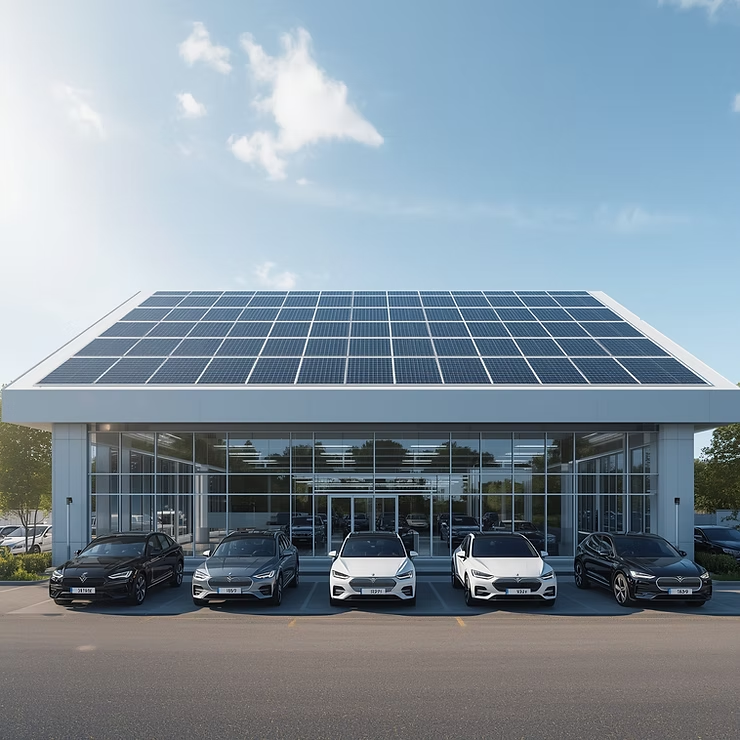
Auto dealerships are switching to solar to lower electricity purchases, help manage the cost of EV charging, and put rooftops and parking areas to work. Solar carports also shade vehicle inventory and customer parking. The financial return depends on installation costs, utility rates, electricity use, and available incentives.
A dealership has plenty of reasons for a large electric bill. Air conditioning keeps a glass-fronted showroom comfortable. Compressors and equipment run in the service department. Lot lights stay on after the sales team goes home. Add vehicle charging, and the property may be using electricity very differently than it did a few years ago.
Those conditions make solar energy for auto dealerships worth evaluating. But a high bill alone doesn't tell you how much solar will save. The useful questions are which charges you can reduce, where the panels will fit, and how the project affects daily operations.
Start with the Bill Behind the Bill
Before comparing equipment, pull together a full year of utility bills and, if available, the utility's interval usage data. Monthly totals tell you how much electricity you buy. Interval data shows when you buy it, often in 15-minute increments. That timing matters when evaluating solar for auto dealerships with high utility costs.
Your bill may separate energy charges, measured in kilowatt-hours, from demand charges, based on peak power use in kilowatts. Solar can reduce purchased energy while it is producing. Demand savings depend on whether solar is generating during the periods used to calculate your billed peak.
Berkeley Lab's research on commercial solar demand savings explains why the outcome varies with the customer's load, solar production, and rate design. A proposal should model those charges separately. Promising to reduce every line of the bill by the same percentage would miss an important part of the calculation.
Look at planned changes too. A service expansion, longer opening hours, or new chargers can change the right system size. If you want a refresher before comparing proposals, our guide to solar panels for your business explains the basic equipment and site considerations.
Solar for Car Dealership Rooftops
A showroom or service building can offer useful installation space without taking vehicles off the lot. Solar for car dealership rooftops is often the first option to price because the building already provides a supporting structure. The roof still needs an engineering review, and the cheapest-looking layout isn't always the most practical one.
Check the roof's age and condition before committing. If replacement is approaching, coordinate that work with the solar installation. Otherwise, a future roofing job may require paying to remove and reinstall the panels. Ask how the mounting method affects the roof warranty and who handles any leaks or damage associated with installation.
HVAC equipment, skylights, drainage routes, and required access paths also affect usable area. A broad roof seen in an aerial photo may hold fewer panels than expected once those spaces are reserved. Standing-seam roofs may allow clamped attachments, while some flat roofs can use ballasted systems. Neither approach is suitable for every structure.
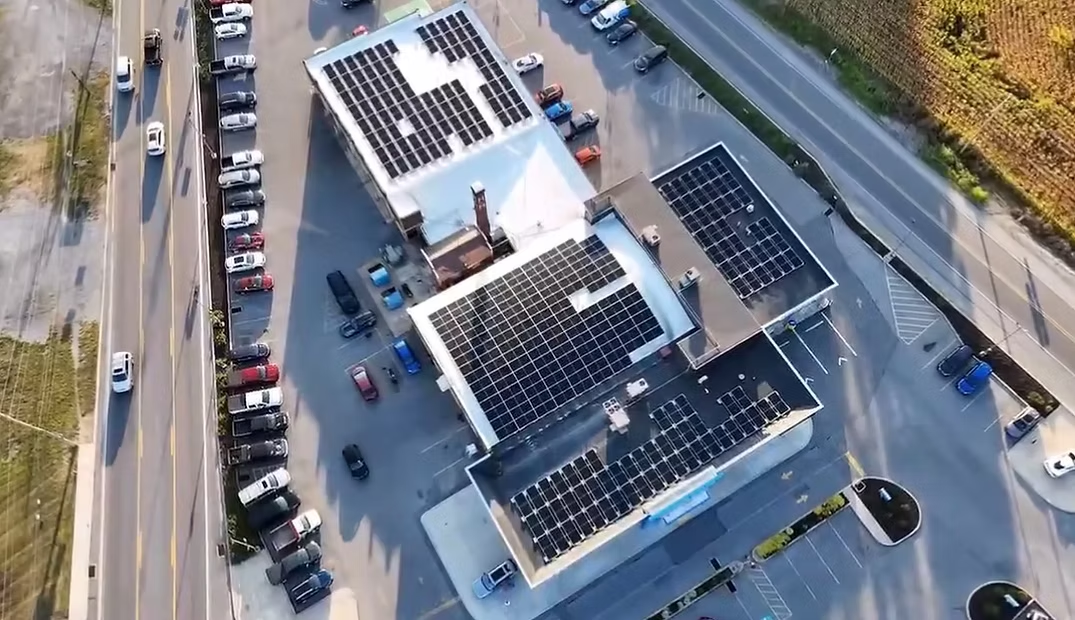
Discuss the installation schedule with the service manager. Where will crews stage materials? Will any electrical shutdown affect lifts, diagnostic equipment, or customer appointments? A workable plan should identify those interruptions before the contract is signed.
The Cost of Solar Carports for Auto Dealerships
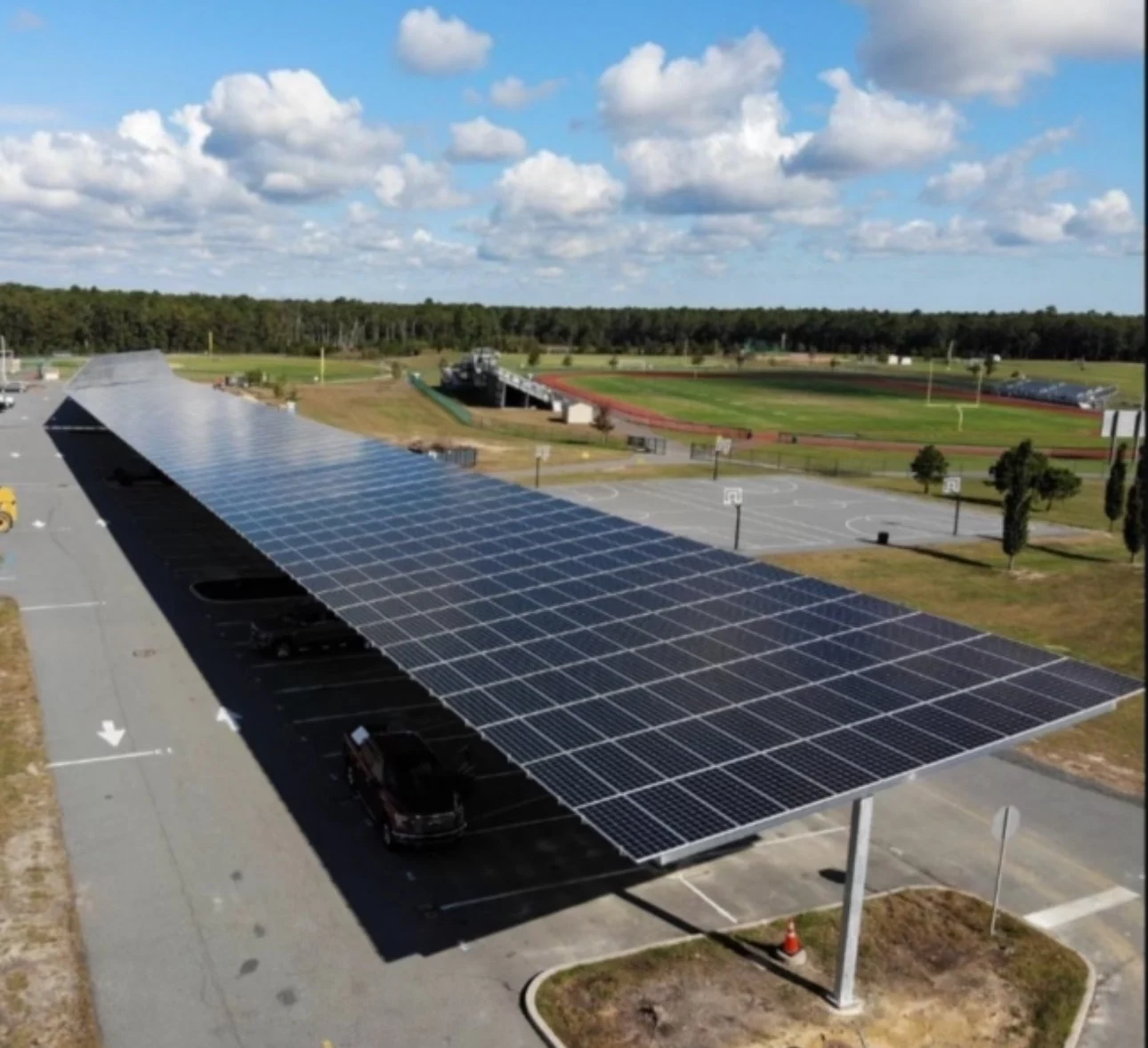
The cost of solar carports for auto dealerships includes both an energy system and a new structure. Beyond panels and inverters, the budget can include steel, foundations, engineering, trenching, drainage, pavement repair, permits, and electrical upgrades. That added construction often makes a carport more expensive than a comparable array on a suitable existing roof.
For a dealer, the additional structure can be useful in its own right. Covered rows give customers shade while browsing vehicles and keep some inventory out of direct sun. A canopy over charging spaces can make those bays more comfortable. The panels are also visible, giving staff a concrete example to discuss with customers considering an electric vehicle.
A good layout respects how cars move through the property. Columns must fit around parking stalls, accessible routes, turning areas, and delivery access. Clearance for vehicle transporters and service traffic needs attention. Underground utilities or difficult soil conditions can change foundation costs considerably.
Ask for the gross installed price, the system's DC capacity, and the scope behind the quote. As a purely illustrative calculation, a 200-kW carport quoted at $900,000 would cost $4.50 per installed DC watt. Those assumed figures are not a market estimate or an Ethics & Energy quote. They show how to compare bids using the same units. Confirm whether batteries, chargers, utility work, and pavement restoration are included.
Then compare the extra cost of the canopy against its extra value. Our commercial solar carport options are a starting point for evaluating covered parking alongside a rooftop design. A smaller canopy over selected rows may be more useful than covering every available space.
A Visible Carport Trend in California
California provides real examples of the trend toward combining dealership solar with covered parking. In a project described by its financing provider, Dublin Toyota installed solar on its service facility and new carports. The project also included LED lighting. Its reported results reflect that combination of improvements, so they shouldn't be treated as a promise for a different dealership.
In Southern California, the installer reports that Mossy Nissan Chula Vista combined rooftop panels and solar carports in a 391-kW system. These examples show dealers adopting the approach in different parts of the state, although they don't establish a statewide adoption rate.
The appeal is understandable: large parking areas can serve a second purpose while remaining vehicle space. For a project in California, evaluate the property's actual tariff and compensation for exported electricity. A system that uses most of its production on-site can have different economics from one that sends a large share to the grid.
How Does Solar Fit with Existing EV Chargers?
Solar can supply part of the electricity used by dealership chargers when charging coincides with solar production. It can reduce grid purchases, but it does not automatically eliminate charging-related demand charges. Charger scheduling, power limits, and sometimes battery storage need to be evaluated alongside the solar system.
Many dealerships have already invested in electric-car charging infrastructure. In November 2023, NADA described roughly $5 billion in dealer EV investments, including chargers, equipment, tools, parts, and staff training. That figure covered more than charging alone. It does illustrate how much preparation was already underway.
For a store with chargers in place, review actual charging sessions. Inventory vehicles may have flexible charging windows, while a customer pickup may require a quick top-up at a particular time. Charging several vehicles simultaneously can create a peak that a passing cloud leaves solar unable to offset.
A battery may help manage short peaks, but its cost needs to earn its place in the model. Backup operation also requires equipment designed for that purpose. A standard grid-connected solar array typically shuts down during an outage and should not be presented as automatic backup power for the showroom.
Check Incentives Before Accepting a Payback Estimate
Compare proposals using the same assumptions about utility prices, financing, maintenance, equipment replacement, and incentive eligibility. Separate the initial project price from potential tax benefits. A tax credit and a depreciation deduction have different financial effects, and neither should be treated as guaranteed cash at installation.
Timing deserves particular attention. Under IRS Notice 2025-42, applicable solar facilities whose construction begins after July 4, 2026, face a December 31, 2027, placed-in-service deadline for the federal clean electricity investment credit. Meeting that deadline alone does not establish eligibility. Have your tax adviser confirm the construction rules and other requirements for your project.
Ask for a conservative case as well as the main forecast. What happens if electricity prices rise more slowly, the project takes longer, or charger usage stays below expectations? Those answers are more useful than a payback figure with unexplained assumptions.
What Should a Dealership Bring to a Solar Consultation?
Bring 12 months of electricity bills, available interval data, charger specifications, roof information, and a site plan. Include the property's ownership or lease details and any planned remodeling. Together, those materials help a designer compare rooftop and carport options against actual operating needs.
It also helps to bring someone who knows the lot. Sales and service staff can flag delivery routes, busy parking rows, and areas that must stay open during construction. Looking through commercial solar case studies can give the team a clearer picture of possible layouts before that discussion.
The best solar solutions for car dealerships begin with a proposal the owner and controller can both understand: the cost, the expected production, the assumptions behind savings, and the impact on operations. With those details in hand, a dealer can decide whether rooftop panels, a carport, or a combination deserves the investment.