
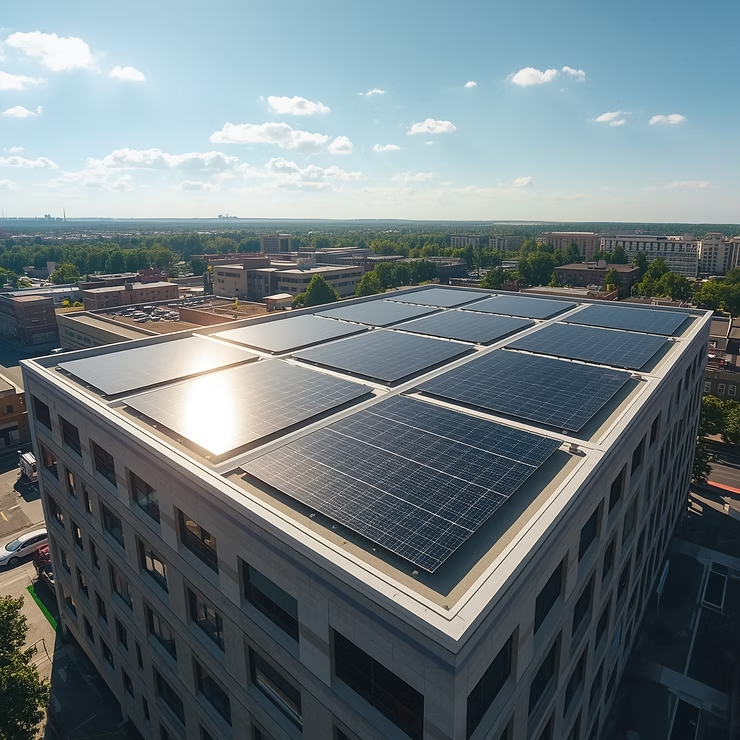
When business owners start looking into solar, the first question is usually simple: can solar panels actually make sense for my business? The answer depends on more than the number of sunny days in your area. Your electricity profile, roof or land, utility rate structure, ownership model, and available incentives all matter. A well-planned solar system for a commercial building can reduce purchased electricity, make long-term energy costs easier to forecast, and turn underused space into a productive asset.
The key is to evaluate the property before trying to choose a system size or finance option. Commercial solar is not one-size-fits-all. A warehouse with broad, open roof space has different opportunities than an office campus, dealership, manufacturer, farm, or multi-tenant retail center. The best starting point is a site-specific analysis built around the way your business uses power today and where it is headed next.
Solar Panels for Your Business: What You Need to Know
Solar panels for your business generate electricity on-site. During daylight hours, that production can offset some of the electricity your company would otherwise purchase from the utility. The value of the system is tied to the amount of usable electricity it produces, the times it produces it, your utility billing structure, and the incentives that apply to the project.
That is why commercial solar power should begin with real utility data. A review of at least 12 months of bills helps identify annual consumption, demand patterns, seasonal swings, and the parts of the bill that create the largest cost exposure. For some companies, the objective is to reduce a predictable daytime load. For others, it may be to lower demand charges, support new equipment, prepare for EV charging, or improve the economics of a planned building expansion.
A practical proposal should also compare more than one design direction when the site allows it. Rooftop arrays are often a strong fit for flat, low-slope, or standing-seam roofs. A ground-mount array may make more sense when land is available and the roof is constrained. At highly visible properties, solar carports can produce electricity while adding covered parking and a distinctive customer-facing feature.
How Does Commercial Solar Work?
A commercial solar system uses photovoltaic modules to convert sunlight into direct-current electricity. Inverters convert that electricity into the alternating current used by most buildings. The system is connected to the building's electrical infrastructure and, in many cases, the utility grid. When the array is producing, the building uses that solar electricity first and draws the balance it needs from the grid. The exact treatment of excess production, interconnection, and billing depends on the utility and local rules.
System sizing is not simply a matter of covering every available square foot with panels. It is a financial and operational decision. A design team looks at production estimates, electrical capacity, shade, building use, interconnection requirements, and the economics of each additional kilowatt. The U.S. Department of Energy's Solar Rooftop Potential resource explains how size, shading, direction, location, and construction shape a roof's solar potential. A final proposal still needs project-specific engineering and financial assumptions.

It is also important to distinguish production from savings. Production is the electricity a system is expected to generate. Savings are the financial result after the system is matched with your rate schedule, consumption pattern, project cost, incentives, and financing structure. That distinction is where a serious commercial solar solution earns its value. A good model should show the assumptions behind the projected savings, not just a single optimistic number.
Is My Roof Suitable for Commercial Solar Panels
A commercial roof may be suitable for solar panels if it has adequate unshaded area, sufficient structural capacity, enough remaining service life, workable access around rooftop equipment, and a viable path to the building's electrical system. A qualified assessment confirms those details before a system is designed or priced.
Roof suitability is about more than orientation. Large flat roofs can be excellent candidates because they offer flexible layout options, but roof condition remains critical. If a roof is nearing replacement, it is usually smarter to coordinate that work before installing an array. Removing and reinstalling a solar system later can add cost and operational disruption. A professional assessment should review membrane condition, drainage, penetrations, parapets, equipment clearances, fire access, and the roof warranty.
Structural review is equally important. Panels, racking, ballast or attachments, wind, and snow all affect the design. The U.S. Department of Energy's commercial rooftop solar FAQ notes that a solar installer should assess structural integrity and design to meet applicable wind and snow loads. The same review should address how the system will coexist with HVAC equipment, drains, future maintenance, and any planned roof work.
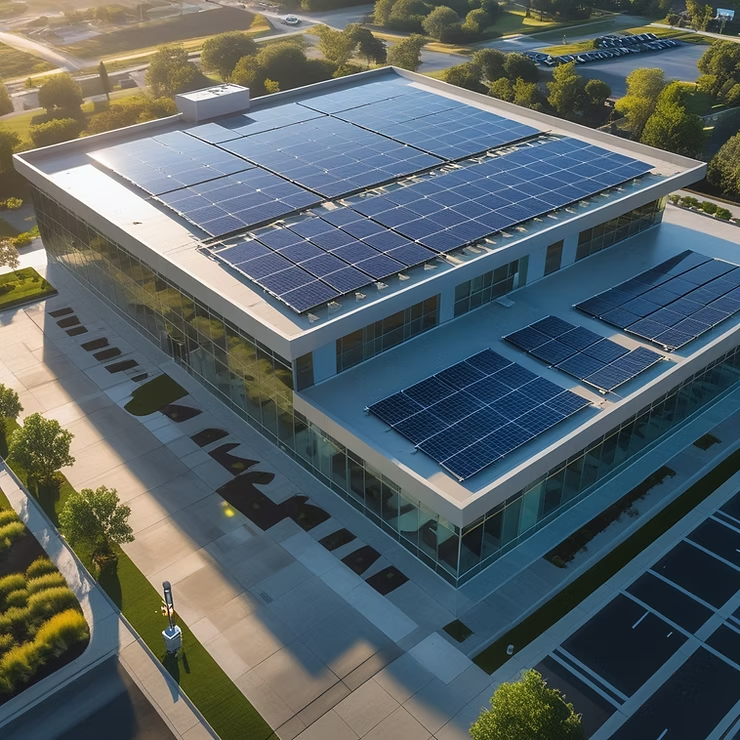
Not every good commercial solar project belongs on a roof. A property may have too much shading, limited roof life, unusual structural conditions, or a layout that leaves little usable area. That does not automatically end the conversation. Ground-mount and carport options can open up a different path, especially for businesses with parking areas or available land. The goal is not to force a rooftop system onto every building. It is to identify the option that produces the strongest long-term outcome for that specific property.
Can Solar Panels Power an Entire Commercial Building?
Solar panels can offset all, most, or only part of a commercial building's annual electricity use. The result depends on available installation area, the building's consumption, local solar production, utility rules, and whether the business includes battery storage or other energy equipment. Many grid-connected projects are designed to offset a targeted portion of annual use rather than operate a building independently from the grid.
That distinction matters because a building's demand does not always occur when the sun is shining. A manufacturing plant may have a consistent daytime load that lines up well with solar production. A restaurant, hospital, or cold-storage facility may have substantial demand outside solar hours. A dealership adding EV chargers may have a new daytime opportunity, but its total load profile still needs to be modeled. For businesses that use a lot of electricity, the question is often not whether solar can cover every kilowatt-hour. It is how much solar capacity the property can use economically.
Solar plus storage can change that calculation by shifting some solar energy for later use, but it adds cost and design considerations. Storage can be valuable for certain resilience goals, time-based rates, or demand-management strategies. It should be evaluated as part of the overall energy plan rather than added because it sounds attractive. The Department of Energy's solar cost benchmark resource is a helpful reference for understanding how commercial PV and storage systems are evaluated at a high level.
Incentives Can Change the Commercial Solar Decision
Incentives can materially affect the economics of solar for business, but they should never be treated as a generic discount. Eligibility can depend on the project's location, ownership structure, construction timing, equipment sourcing, labor requirements, and the business itself. State, utility, and local programs can also vary widely. A model built without checking these details can miss opportunities or, just as importantly, overstate the value of an incentive that does not apply.
Federal clean-energy tax rules are especially important to review with qualified tax and legal advisors. The IRS describes the Clean Electricity Investment Credit and its requirements, including rules that can affect the available credit amount. The most useful approach is to build a current incentive review into the project process, document the assumptions, and update the model before a final investment decision is made.
Industry context matters too. Facilities with large, steady electric loads may have a different case for solar than office properties. Businesses considering a new building, major roof replacement, fleet electrification, or equipment upgrade have a natural opportunity to evaluate solar alongside those plans. For example, our solar resources for manufacturers explain why high-energy facilities often need a more tailored analysis than a simple panel-count estimate.
What Should a Business Do Before Requesting a Solar Proposal?
Start by gathering the information that makes a proposal useful: recent utility bills, the property address, roof age if known, planned construction or equipment changes, and a clear picture of your business goals. A company trying to reduce operating costs may evaluate solar differently than one prioritizing resilience, customer experience, or a long-term energy hedge.
Then ask for an analysis that explains the tradeoffs. You should understand the proposed system size, expected production, the electricity assumptions behind the savings estimate, the roof or site constraints, the incentive assumptions, and the implementation steps. If your property is one of several locations, compare the sites rather than assuming they all deserve the same design. The best candidate may be the building with the right combination of load, usable space, and incentive eligibility.
There is value in seeing how other businesses approached those choices. Our commercial solar case studies provide examples of projects across different property types. They are not a substitute for a site assessment, but they can help clarify the questions worth asking before you commit.
Solar Power for Businesses Starts with the Right Questions
Commercial solar works best when it is treated as a business decision, not a product purchase. The right system should fit the property, the utility bill, the operations of the company, and the incentives available at the time. If the roof is not a fit, another structure may be. If the goal is not full energy independence, a right-sized array can still create meaningful value.
The next step is a clear, location-specific review of what your business uses, what the site can support, and which options deserve a closer look. That is how companies move from a general interest in solar panels for my business to an informed decision about whether solar energy belongs in their long-term plan.