
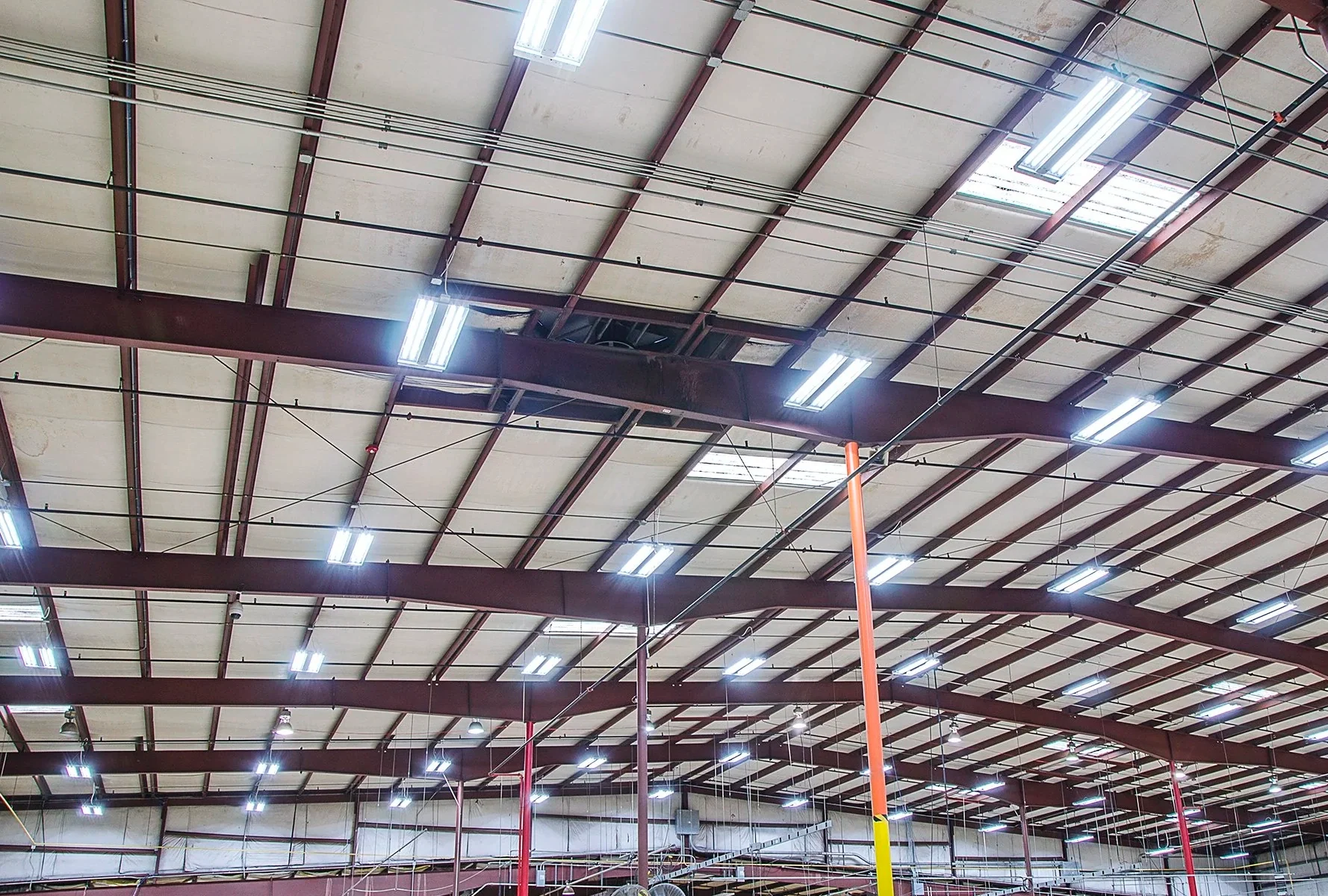
A warehouse LED lighting upgrade can reduce electricity use, improve visibility, and lower the time spent replacing lamps and ballasts. For eligible Dominion Energy Virginia customers, a rebate may improve the project economics, but the program process needs to be handled before equipment is ordered or installed.
Richmond-area facilities often have long operating hours, high ceilings, aisle-based work, loading areas, and a mix of older fluorescent or metal-halide fixtures. That creates an opportunity, but it also means a lighting plan should be based on the actual space. Fixture count alone does not show whether the new system will deliver safe, even light where employees need it.
Ethics & Energy evaluates commercial lighting upgrades with the rebate, equipment, controls, installation, and projected energy savings in one model. That helps an owner understand the full project rather than treating the incentive as the only reason to proceed.
LED Retrofit Rebate Program
Dominion Energy Virginia offers energy-efficiency incentives for qualifying nonresidential projects. Its current business energy programs include lighting measures and custom projects. Eligibility, incentive amounts, equipment requirements, and application steps depend on the project and program in effect when the customer applies.
The most important practical rule is to check requirements before installation. Dominion's published terms state that custom projects require pre-approval. Starting too early can put an incentive at risk. A facility should document existing fixtures, proposed equipment, operating hours, controls, and estimated savings before committing to the work.
Dominion's current Virginia energy-efficiency program page lists lighting systems and controls among its business offerings. Because program details can change, the project team should use the current application materials rather than a saved document from an earlier year.
Energy-Saving Lighting Upgrades for Warehouses
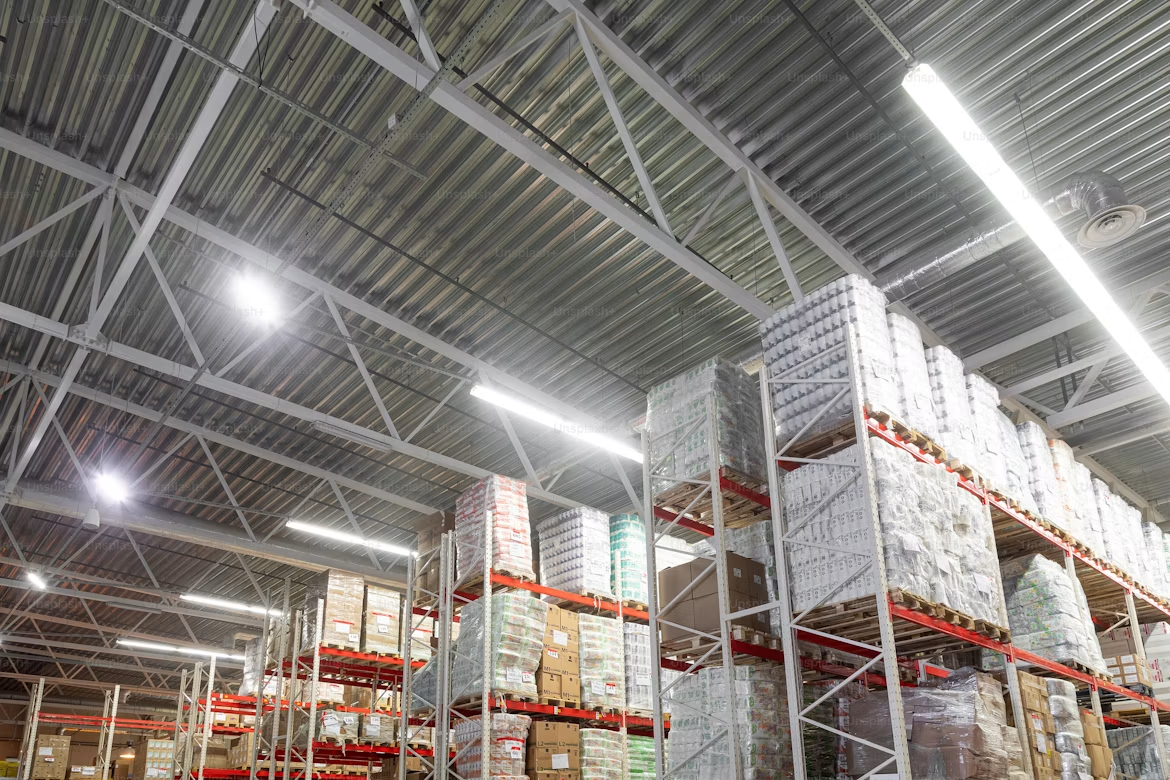
Warehouses can benefit from LED lighting because they often combine large floor areas, tall mounting heights, long operating schedules, and zones that are occupied at different times. Modern high-bay fixtures can deliver light more efficiently than many older systems, while controls reduce unnecessary run time.
The U.S. Environmental Protection Agency's commercial lighting guidance identifies lower energy use and reduced maintenance among the benefits of LEDs. The actual savings in a warehouse depend on the existing equipment, wattage, hours, controls, and light levels required for the work.
A good retrofit begins with a survey. The team records fixture types, wattages, quantities, mounting heights, controls, operating hours, and problem areas. Loading docks, cold storage, offices, stairwells, exterior yards, and emergency lighting may need different fixtures and control strategies.
How Does a Warehouse LED Retrofit Work?
A warehouse LED retrofit replaces or modifies existing lighting with efficient fixtures and controls designed for the facility. The process includes a site survey, photometric planning, rebate review, equipment selection, installation scheduling, verification, and final incentive documentation.
- Document the current fixtures, wattage, controls, and operating hours.
- Identify required light levels for aisles, racks, loading areas, and workstations.
- Select fixtures and controls that meet operational and rebate requirements.
- Submit any required pre-approval material before installation.
- Install, test, and retain invoices and closeout documents.
Photometric planning matters because fewer watts do not automatically mean better lighting. The design should control glare, maintain uniformity, and place light where employees read labels, operate equipment, inspect goods, and move through aisles.
Occupancy and Daylight Controls
Controls can add savings where sections of a warehouse are empty for long periods. Occupancy sensors may dim or turn off fixtures in low-traffic aisles, storage rooms, and support spaces. Daylight controls can reduce output near skylights or windows when natural light is sufficient.
Controls should match the operation. A delay that leaves a lift-truck operator in a dark aisle is not acceptable, and an oversensitive sensor can erase intended savings. Commissioning should verify detection zones, dimming levels, timing, and the interaction with emergency systems.

How Much Can a Warehouse Save With LED Lighting?
Warehouse LED savings depend on the difference between existing and proposed wattage, annual operating hours, controls, electricity rates, maintenance, and the final rebate. A reliable estimate shows each assumption and compares it with actual utility information.
The basic energy calculation is the reduction in kilowatts multiplied by operating hours. Controls may reduce hours further, but that estimate should reflect real occupancy. Maintenance savings can include fewer lamp and ballast replacements, lift rentals, and labor at high mounting heights.
Owners should review simple payback and cash flow rather than focusing only on the rebate percentage. The incentive can lower upfront cost, but the facility still needs appropriate light quality, dependable equipment, and a realistic installation plan.
Why Richmond Facilities Need a Local Rebate Review
Utility programs follow service territory, not city limits alone. A Richmond mailing address does not prove that a facility is eligible for a particular Dominion program. The account, rate class, building type, and proposed equipment must be checked.
Our Richmond commercial energy page explains why local conditions matter. A company with several Virginia warehouses may receive different results at each address if the utilities, tariffs, operating hours, or existing fixtures differ.
Rebate budgets and requirements can also change. That is why an older quote should be refreshed before approval. The current program documents and the facility's account information should support every incentive shown in the proposal.
Can Lighting and Solar Be Planned Together?
Yes. Lighting efficiency lowers the building's electrical load, while solar produces electricity on site. If a warehouse plans both, the solar system should be sized using the expected post-retrofit load rather than older consumption that includes inefficient fixtures.
A combined plan can also coordinate roof work, electrical panels, shutdowns, financing, and capital approval. Our commercial solar planning starts with the same utility information used in a lighting review, which makes it easier to compare the measures together.
Prepare for a Useful Lighting Assessment
A warehouse owner can start with recent electric bills, operating hours, fixture information, floor plans, ceiling heights, and photos of representative areas. Any safety, glare, dark-zone, or maintenance problems should be noted. The assessment can then identify equipment, controls, rebate steps, projected energy savings, and installation logistics.
Ethics & Energy can help facilities compare energy improvements and review relevant commercial project examples. The objective is a clear proposal that improves the building and explains exactly how the rebate and savings were calculated.