
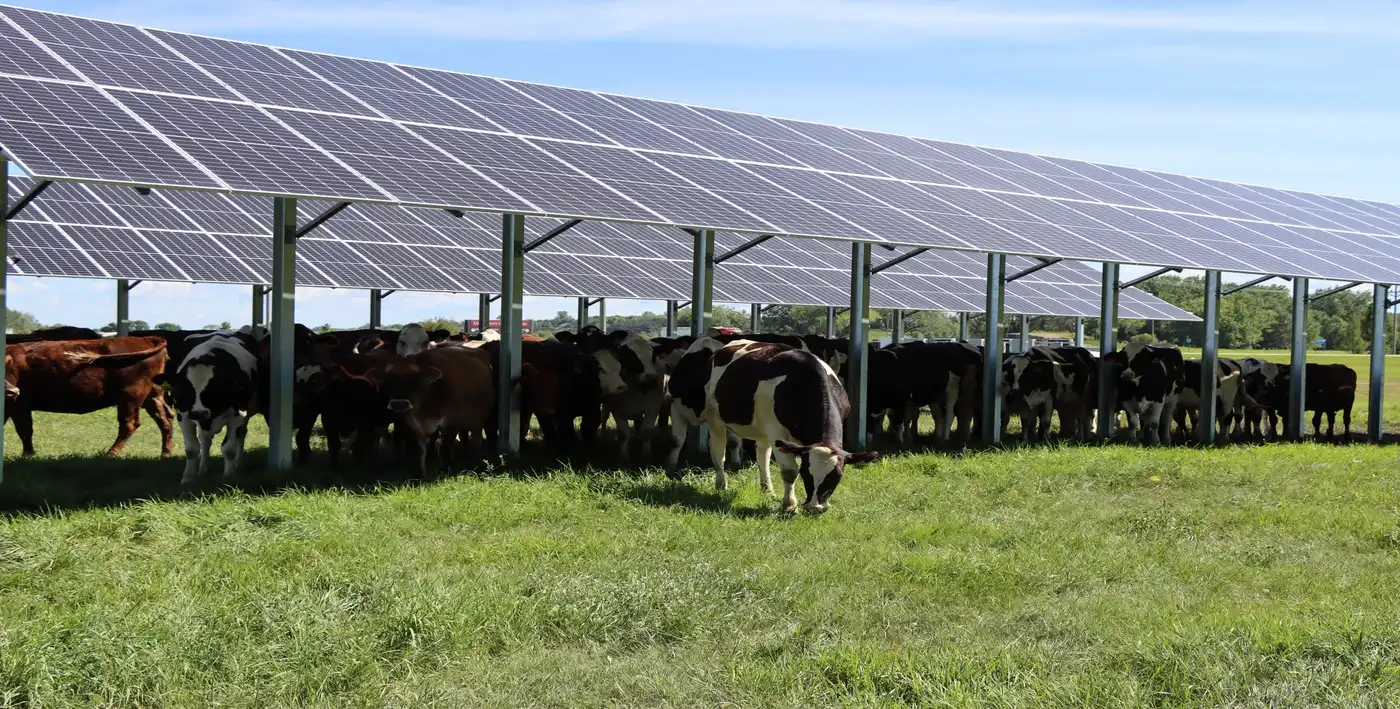
Dairy farms use electricity every day for milking, milk cooling, water heating, ventilation, lighting, pumps, and other essential equipment. Those predictable loads can make solar a practical way to reduce purchased electricity, but the right design depends on the farm's actual bills, buildings, land, and operating schedule.
Solar does not need to power every piece of equipment at every moment to be useful. A grid-connected system produces electricity during daylight hours, the farm uses that production on site, and the utility supplies the balance. A well-built financial model shows how that relationship changes the bill without suggesting that panels replace propane, diesel, or fixed utility charges.
Our approach to solar for farmers starts with the farm rather than a standard system size. We review the meters, load pattern, roofs, open land, rate structure, and local rules before recommending rooftop or ground-mounted solar.
Solar Panels for Farmers
Farm solar projects need to respect production, access, and long-term land use. A dairy may have several barns, a milking parlor, cooling equipment, wells, shops, and employee facilities. Those loads may sit behind different electric meters, so a proposal should explain which equipment and accounts the system is expected to serve.
University of Wisconsin Extension notes that milking, milk cooling, lighting, and ventilation account for much of a dairy farm's electricity use. Its dairy-building energy guidance shows why the farm's equipment and building design matter. Solar deserves the same farm-specific analysis.
Efficiency improvements and solar can work together. Variable-speed drives, milk pre-cooling, heat recovery, LEDs, and controls may lower the farm's future electrical load. If those upgrades are planned, the solar model should reflect them. Planned herd growth, robotic milking, additional refrigeration, or new buildings may increase the future load and should also be included.
Solar Panels for Farm Buildings
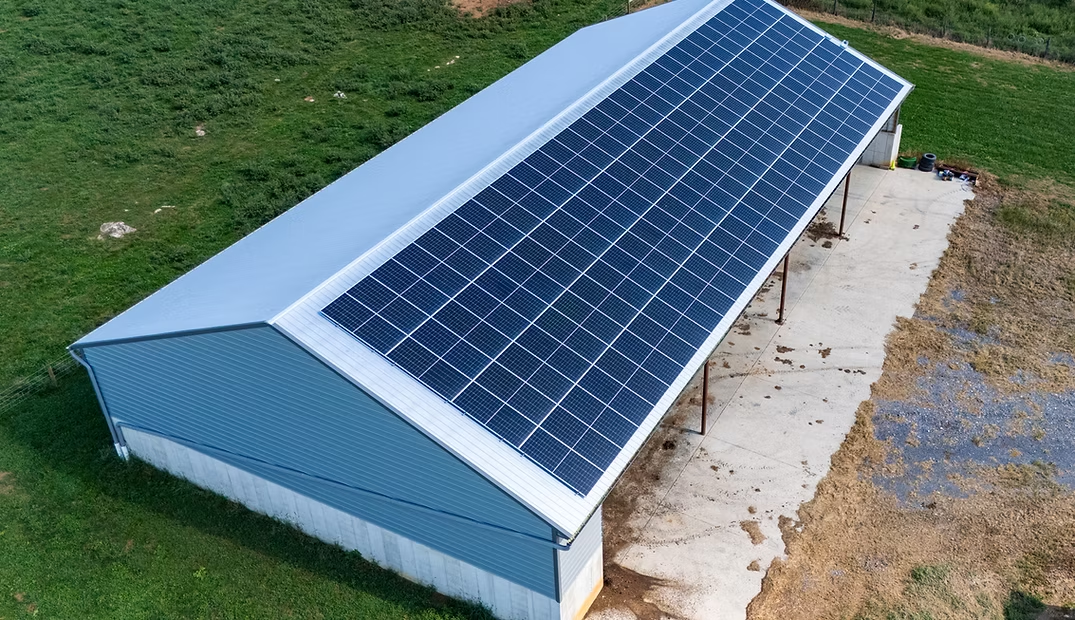
Barn and equipment-building roofs can provide substantial space for panels, but suitability is not determined by size alone. Structural capacity, roof condition, remaining service life, ventilation openings, shading, wind exposure, and safe maintenance access all matter. The mounting approach must fit the roofing material and coordinate with future repairs.
A roof that needs replacement soon may still support a solar project if both scopes are planned together. In other cases, a ground-mounted array may be the better choice. Ground mounts can offer favorable orientation and easier service access, though they require suitable land, drainage, setbacks, fencing, and an economical electrical connection.
Farm ownership and property leases rarely make solar impossible. The parties need clear written expectations about site access, equipment ownership, roof responsibilities, insurance, maintenance, and the term of the arrangement. Bringing the landowner, lender, and farm operator into the conversation early usually makes the process easier.
How Does Solar Match a Dairy Farm's Energy Use?
Solar can match a dairy farm well because many electrical loads repeat every day. Milk cooling, vacuum pumps, ventilation, lighting, water systems, and controls may operate while the array is producing. The exact match depends on milking schedules, equipment, weather, and season.
The USDA Natural Resources Conservation Service identifies milk cooling, water heating, milk harvesting, lighting, and air circulation among the major energy uses in dairy housing. Its farm energy resources can help owners understand the categories, but a project still needs utility bills and site-specific measurements.
A credible analysis compares at least 12 months of consumption with expected monthly solar production. It should separate energy charges from demand charges, fixed fees, and other items. That prevents a system from being marketed as eliminating a bill when some charges may remain.
Local Incentives Can Change the Dairy Farm Solar Decision
Solar incentives vary by location, ownership, utility, and project timing. Federal tax benefits may apply to qualifying projects, while state or local programs can create additional value. Program availability should be confirmed before construction, and tax assumptions should be reviewed by the farm's adviser.
Pennsylvania offers an example of why a local review matters. The state's RISE PA program supports qualifying industrial decarbonization projects, including certain on-site renewable energy investments. A dairy farm is not automatically eligible. An agricultural business with a qualifying processing or industrial operation may fit a program track, but ordinary farm activity should not be presented as guaranteed eligibility. Funding rounds and requirements also change.
The safer approach is to screen the business against every current program instead of naming one grant as certain. Ethics & Energy reviews the project address, business activity, utility territory, ownership, and schedule to identify local opportunities. Our Pennsylvania commercial solar page explains why the same project can produce a different result across state lines.
What Information Is Needed for a Dairy Solar Estimate?
A dairy solar estimate should begin with the site address, at least 12 months of electric bills, meter information, roof or land details, and plans for equipment or herd changes. That information is enough to build a preliminary production and savings model.
- Utility account and rate information for every meter under review
- Photos, plans, or measurements for candidate roofs and land areas
- Known roof age, structural concerns, or planned building work
- Future changes to milking, cooling, ventilation, or pumping equipment
- Ownership, lease, lender, and tax details that may affect approvals
The proposal should clearly state expected annual production, the amount likely consumed on site, assumptions about electricity prices, maintenance, financing, and incentives. It should also show which costs remain on the utility bill.
Plan Around the Farm, Not the Panels
A dairy solar project must preserve access for milk trucks, feed delivery, manure handling, emergency vehicles, and everyday farm traffic. Construction scheduling should account for animal routines and any required electrical shutdowns. Equipment placement needs to leave room for roof service, snow management, drainage, and future expansion.
Reviewing relevant commercial solar case studies can help a farm owner understand the range of system types, but another property's numbers should not be treated as a forecast. The best next step is a model built for the farm's own utility accounts.
Find Out Whether Solar Fits Your Dairy
Solar panels for dairy farms can turn a portion of a recurring operating expense into long-term on-site generation. The decision should still be based on realistic production, current incentives, utility rules, and the farm's financing goals.
Ethics & Energy works with agricultural operations to compare roofs and ground-mount locations, review local incentives, and prepare a farm-specific financial model. That gives owners a practical answer about cost, savings, and fit before they commit to construction.