
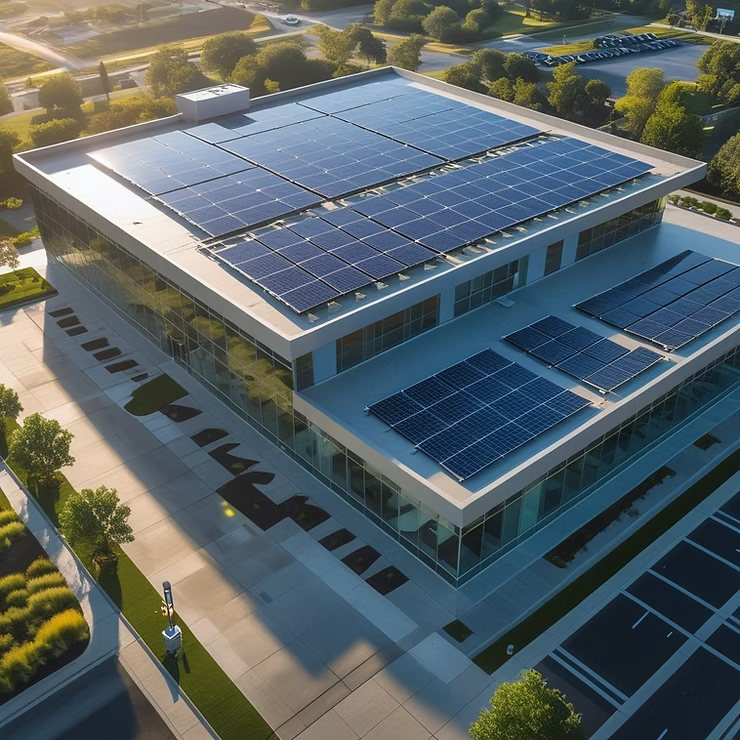
Manufacturing facilities can be strong solar candidates because they often use substantial electricity during the same daytime hours that panels produce power. The opportunity is not limited to a large roof. Utility rates, demand, process loads, expansion plans, incentives, and possible battery storage all shape the result.
A plant should not start with a price per panel. It should start with interval energy data, production schedules, the facility layout, and the company's financial priorities. Those details reveal whether solar is likely to reduce energy charges, whether demand charges need a separate strategy, and how much of the available roof or land should be used.
Ethics & Energy provides solar planning for manufacturers that connects engineering decisions with incentives and cash flow. The goal is a project that works around operations and supports the plant's long-term energy plan.
Solar for Industrial Use
Industrial facilities differ from ordinary commercial buildings. Motors, compressors, process heating, refrigeration, ventilation, material handling, and production lines can create high and variable loads. Some operate one shift, while others run around the clock. Solar production must be compared with that real pattern.
A plant with steady daytime demand may use most solar production on site. A facility with a pronounced short-duration peak may need a different design because energy charges and demand charges are calculated differently. The proposal should show what solar is expected to reduce and which utility costs remain.
Roof area is another important factor. Manufacturing roofs can be large, but equipment, vents, drains, skylights, fire lanes, structural capacity, and future roof work reduce the usable area. An engineering review should occur before a preliminary layout is treated as final.

Best Solar Battery Storage for Manufacturers
The best solar battery storage for a manufacturer is the system designed around a defined operating need. One plant may want to reduce a recurring demand peak. Another may need short-duration support for selected controls, communications, refrigeration, or safety equipment. A third may value the ability to shift solar production into a more expensive rate period.
Battery size should follow load data, tariff rules, critical-load requirements, available space, fire and building codes, and the expected cycling strategy. Buying the largest battery that fits is not a useful design method. The model should explain how frequently the battery is expected to operate, what savings it targets, and how degradation and replacement are treated.
The U.S. Department of Energy explains that energy storage can shift energy across time, balance supply and demand, and support reliability. Those capabilities are valuable, but a standard grid-connected solar array and battery do not automatically keep an entire factory running through an outage. Backup power requires appropriate controls, isolation equipment, and a design centered on specific critical loads.
Manufacturers should also compare storage with operational changes. Rescheduling a flexible process, improving controls, or reducing an inefficient load may address the same peak at a lower cost. Solar, storage, and efficiency should be modeled together rather than sold as unrelated products.
RISE Grant for Manufacturers in PA
Pennsylvania manufacturers may have access to RISE PA, a state industrial decarbonization grant program that includes qualifying on-site renewable energy and energy-efficiency projects. The program is specific to Pennsylvania and industrial eligibility. A business should not assume it qualifies solely because it owns a commercial building in the state.
The official RISE PA program page describes small, medium, and large project tracks. Funding rounds, deadlines, cost-share rules, and eligible activities can change. At the time of a project review, the manufacturer needs to confirm whether a round is open and whether its facility, project scope, and schedule meet the current rules.
RISE PA can be significant because qualifying grant support may stack with separate federal tax benefits and other incentives when program rules allow. The combined value can be surprising, but each source has its own requirements. A grant should not be shown as guaranteed before eligibility and award are confirmed.
Our Pennsylvania solar team reviews the facility location, industry, project size, energy savings, construction timing, and application obligations. We also identify other federal, state, local, and utility opportunities so the owner sees the full incentive picture rather than one program in isolation.
How Much Can Manufacturing Solar Save?
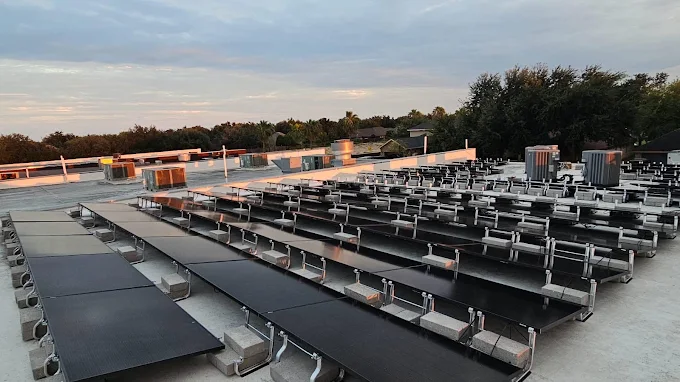
Manufacturing solar savings depend on annual production, on-site use, utility rates, demand charges, financing, maintenance, and incentives. A useful model imports actual bills and interval data, then compares the projected post-solar bill by charge category.
Production estimates should account for the site's location, roof orientation, shading, equipment, temperature, and expected losses. Electricity-rate assumptions should be visible and conservative. Planned production lines, electrification, efficiency projects, or facility expansions must be included because they can change the ideal system size.
The Internal Revenue Service provides current information about the Clean Electricity Investment Credit. Eligibility and potential increases depend on detailed requirements. The manufacturer's tax adviser should confirm the treatment of the project before the credit is included as certain cash flow.
Can a Leased Manufacturing Facility Install Solar?
Yes, a leased manufacturing facility can often install solar when the tenant and property owner agree on access, roof responsibilities, equipment ownership, insurance, maintenance, and the project term. Leasing is rarely an automatic barrier, especially when the operation expects to remain at the facility long enough to support the investment.
The lease should be reviewed early. Roof rights, restoration obligations, lender consent, assignment, and what happens at lease expiration need clear answers. A landlord may also value roof improvements or a long-term tenant investment, but those benefits should be documented rather than assumed.
Plan Installation Around Production
Industrial construction needs a detailed operations plan. Roof access, cranes, loading docks, truck routes, shift changes, safety procedures, dust-sensitive processes, and electrical shutdowns all affect the schedule. The installer should coordinate with plant management before equipment arrives.
Electrical work may require planned outages or tie-ins during weekends, maintenance periods, or line changes. A phased installation can reduce disruption. The project plan should name responsible contacts and explain how work areas will be separated from employees and production.
Build a Facility-Specific Energy Model
The most useful first step is to provide the plant address, 12 months of utility bills, interval data when available, roof information, operating schedules, and planned changes. That gives the project team enough context to screen rooftop, ground-mount, carport, and battery options.
Our broader manufacturing energy page explains how grants and facility planning fit together. A final proposal should identify expected production, projected utility savings, verified incentive assumptions, financing, maintenance, and operational constraints in one place.
Solar panels for manufacturing businesses can reduce long-term energy exposure, but the value comes from design discipline. Ethics & Energy helps manufacturers turn utility and facility data into a decision-ready commercial solar model instead of a generic panel quote.