
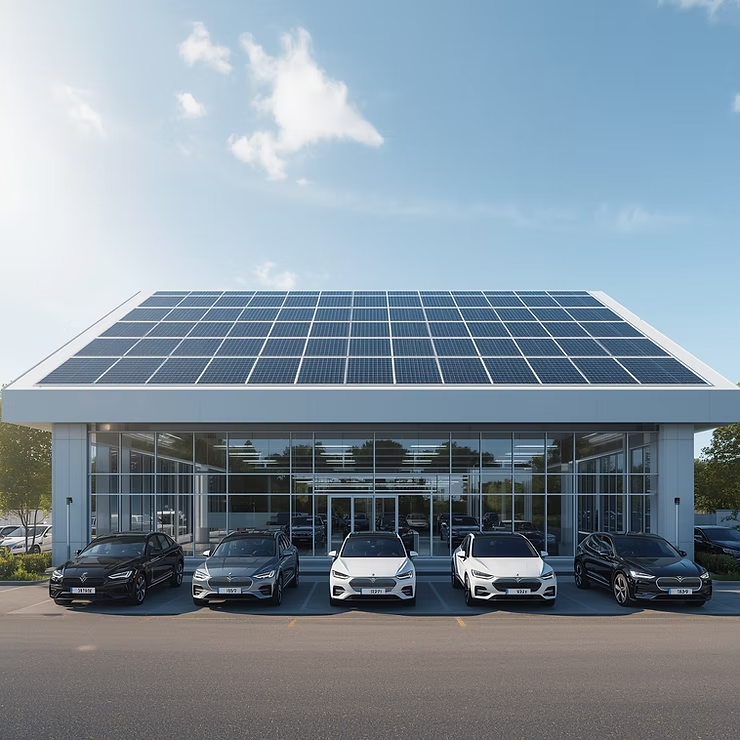
Auto dealers are switching to solar because dealerships often combine large roofs, extensive parking areas, high daytime electricity use, and growing electric vehicle charging demand. Rooftop panels and solar carports can reduce purchased electricity while creating a visible investment in the dealership's property and customer experience.
The opportunity is not identical at every store. Electricity rates, utility demand charges, roof condition, parking layout, charging equipment, tax position, and local incentives all affect the result. A dealership-specific analysis is more useful than a generic estimate based on square footage.
Our solar services for auto dealerships compare the facility's actual load with rooftop and carport options. The objective is to show net project cost, expected production, projected bill savings, and the incentives that currently apply at the property.
Why Auto Dealers Are Switching to Solar
Auto dealers are switching to solar to control a portion of their electricity costs, prepare for higher charging demand, use roofs and parking areas productively, and make a visible clean-energy statement. The strongest projects connect those benefits to a financial model based on the dealership's utility data.
Showrooms, service bays, exterior lighting, ventilation, air conditioning, compressors, lifts, detail areas, parts departments, and office equipment create substantial electrical demand. Much of that activity occurs during daylight hours, when a solar array is producing. If the dealership has already installed EV chargers, its daytime and evening load may be higher still.
A solar project can also help make future electricity costs more predictable. It does not eliminate the utility bill, and it may not reduce every demand or fixed charge. It can, however, lower the amount of electricity purchased when production and on-site use overlap.
Solar for Car Dealership Rooftops
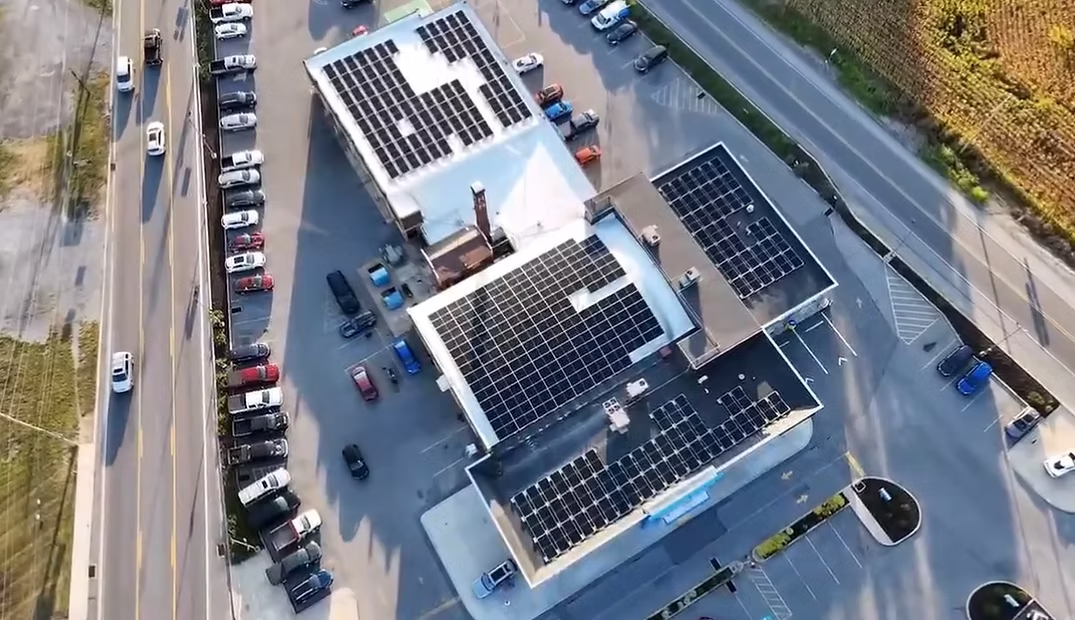
Dealership rooftops can provide valuable installation space without changing the parking plan. Flat showroom and service-building roofs are often large, but a design must work around heating and cooling equipment, skylights, drains, parapets, fire access, shading, and safe maintenance routes.
Roof age and structure matter. Before the financial model is finalized, the project team should understand the remaining roof life, warranty conditions, attachment method, wind requirements, and any planned building expansion. A roof replacement does not necessarily prevent solar, but the scopes should be coordinated so panels do not need to be removed shortly after installation.
Some standing-seam metal roofs can support non-penetrating clamps, while other roofing systems require a different mounting approach. The correct choice depends on the building and engineering review. The image below shows the scale of roof and parking assets that may be available at a typical dealership.
Best Solar Carport Solutions for Car Dealerships
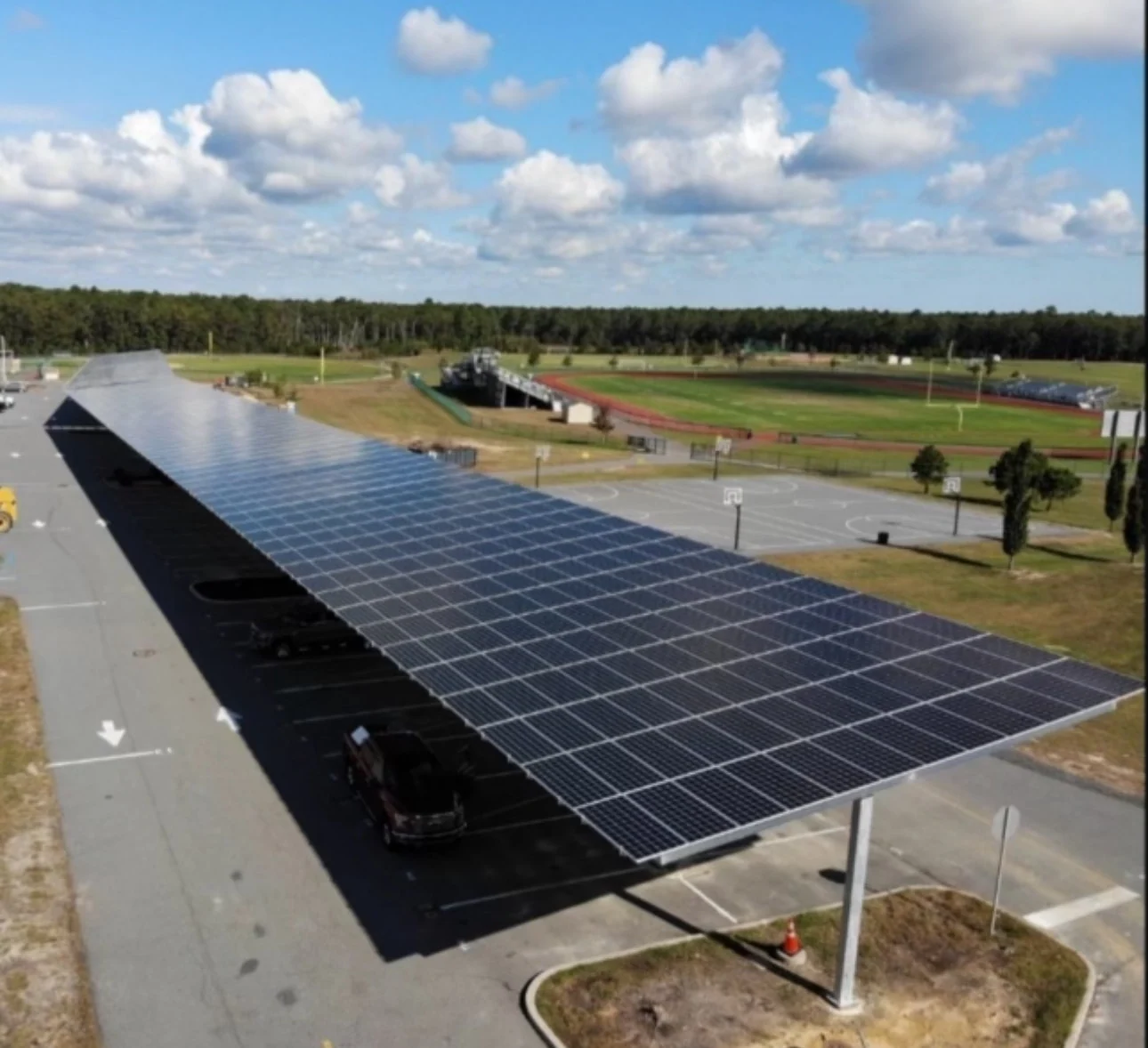
The best solar carport solution for a dealership protects inventory or customer vehicles, preserves traffic flow, provides useful solar capacity, and fits the property's financial goals. It should be designed around column spacing, vehicle clearances, accessible parking, snow and wind loads, lighting, drainage, and underground utilities.
Carports are especially well suited to dealerships because parking is central to the business. A canopy can shade display inventory, service-lane vehicles, employee parking, or customer spaces while producing electricity above them. The structure is visible from the road and can reinforce the dealership's investment in modern vehicle technology.
A carport generally costs more than mounting panels on a suitable roof because it includes foundations and structural steel. The added expense should be compared with the value of covered parking, improved presentation, EV charging integration, and the ability to install more solar when the roof is limited.
Our overview of commercial solar carports explains the practical design questions owners should ask before selecting a canopy layout.
Solar Incentives for Auto Dealerships
Auto dealerships may qualify for federal tax benefits as well as state, local, or utility incentives. Some important solar incentives are ending soon or are becoming more time-sensitive, so dealerships should confirm current rules and project timing rather than relying on an older proposal.
The Internal Revenue Service provides current information about the Clean Electricity Investment Credit. The amount and availability can depend on project timing, labor requirements, domestic content, location, ownership, equipment sourcing, and other details. A tax adviser should confirm how the rules apply to the dealership.
State and utility programs can differ by address. Two dealerships owned by the same group may receive different results because they are served by different utilities or located in different jurisdictions. Ethics & Energy reviews the site, ownership, schedule, and business information to identify which incentives are currently available and which require action before construction.
Why Solar Carports Are Growing in California
California dealerships have helped make solar carports more familiar because the state combines strong solar adoption, extensive EV charging, large parking areas, and building standards that recognize carports as potential solar locations. The California Energy Commission explains that qualifying nonresidential solar may be installed on a roof, on the ground, or on a carport.
The Commission's nonresidential solar guidance also includes covered parking and carports in solar-access calculations for certain projects. Requirements and exceptions vary, so a dealership should review the current code for its permit and building type.
California is not the only strong market. Other states and utility territories can offer favorable electricity rates, grants, tax treatment, or local programs. Our California solar page illustrates why location-specific analysis matters, but the same process applies nationally.
How Does EV Charging Affect Dealership Solar?
EV charging can strengthen the case for dealership solar by increasing the property's electrical load, especially when vehicles charge during daylight hours. Solar production can serve the building and chargers through the dealership's electrical system, reducing the amount of utility power purchased at those times.
The system should not be sized from the charger nameplate alone. Actual charging sessions, power levels, future EV sales, employee and customer use, utility demand charges, and available electrical capacity all matter. A dealership that expects rapid charger growth should include that forecast in the solar model.
Battery storage may also be evaluated where demand charges, time-based rates, or backup priorities justify it. Solar panels alone usually shut down during a grid outage. Keeping selected loads or chargers operating requires appropriate storage, controls, and electrical design.
How Much Can a Dealership Save With Solar?
A dealership's solar savings depend on annual system production, on-site electricity use, utility rates, demand charges, financing, maintenance, and incentives. The useful answer comes from utility bills and interval data, not a national average.
- Collect at least 12 months of bills for every meter under review.
- Separate energy charges, demand charges, fixed fees, and charging loads.
- Compare rooftop, carport, and combined layouts where practical.
- Verify incentive eligibility and deadlines before showing them as project value.
- Model future EV charging, renovations, and dealership expansion.
A proposal should show expected production, the portion likely used on site, and the projected post-solar bill by charge category. It should also explain the assumptions for electricity-price changes and panel performance. Reviewing relevant commercial solar case studies can provide context, but another property's savings should not be treated as a forecast.
Compare the Dealership's Real Options
A dealership does not need to choose between a roof and a carport before the analysis begins. A side-by-side comparison can show how each option affects system size, construction cost, parking, visibility, incentives, and projected cash flow. Some properties benefit from a combined design.
Ethics & Energy can begin with the address, recent utility bills, roof information, parking layout, and charger plans. The resulting assessment identifies the incentives that currently apply and gives the dealership a practical basis for deciding whether rooftop solar, a carport, or both deserve further investment.