
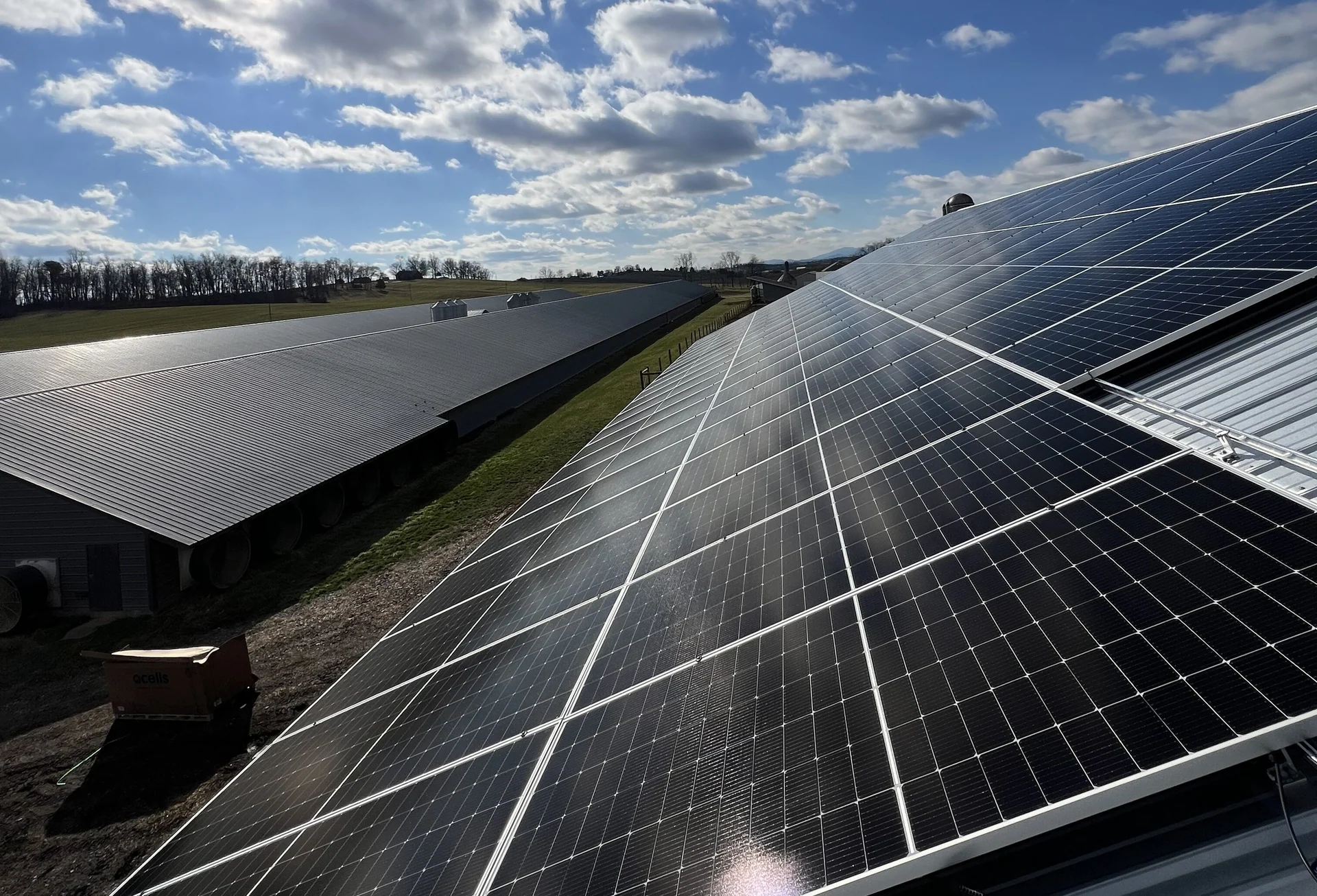
Poultry houses need reliable electricity to protect animal health and keep daily operations moving. Ventilation fans, lighting, water systems, controls, and other equipment can create a steady electrical load. That makes solar worth evaluating for many growers, especially when the system is designed around the farm's actual usage instead of a generic estimate.
The basic idea is straightforward. Panels produce electricity during the day, and the farm uses that power on site before purchasing the balance from the utility. The financial result depends on the farm's load profile, rate structure, available installation area, and incentives. A careful review is more useful than a promise based only on acreage or the number of poultry houses.
Our solar services for farmers begin with utility data and the property itself. We look at how electricity is used, where panels could be installed, and whether the project can be built without interfering with farm traffic, ventilation equipment, or future expansion.
Solar Energy Solutions for Agriculture
Agricultural solar is not one standard product. A poultry operation may have long barn roofs, open land, several meters, and electrical equipment spread across the property. Each of those details affects system design. Roof-mounted panels can preserve ground space, while a ground-mounted system may offer easier access and a better orientation when the poultry-house roofs are shaded or structurally limited.
The U.S. Department of Agriculture has documented poultry farms using solar to address energy costs tied to ventilation and lighting. In one USDA Rural Development poultry farm example, the grower used substantial electricity to pump water and operate large cooling fans. The example is not a savings guarantee for another farm, but it illustrates why poultry loads and solar production can overlap well.
Farm owners should start by gathering at least 12 months of electric bills for every meter that may be included. Interval data, when available, shows when the load occurs. A farm that uses much of its electricity during sunny summer afternoons may have a different opportunity than one whose largest energy expense is heating fuel during winter nights.
Solar Powered Poultry Farm
A solar powered poultry farm usually remains connected to the utility. The panels reduce the amount of grid electricity purchased when they are producing, but the utility continues serving the farm when production is lower than demand. This arrangement can reduce operating costs without requiring the grower to run the entire farm independently from the grid.
The system should be sized for the loads that matter. Poultry-house fans, pumps, lighting, controllers, feed systems, cool cells, and support buildings may all contribute to the electric bill. The USDA Natural Resources Conservation Service lists lighting, ventilation, heating, air circulation, and other animal-housing uses in its agricultural energy resources. A farm-specific analysis separates electric loads from propane, diesel, or other fuels so the proposal does not imply that solar panels will replace costs they cannot address.
Owners should also ask how the proposed array relates to each utility meter. A large system near one poultry house may not automatically offset charges at another meter. Utility territory, interconnection rules, service voltage, and the distance to electrical equipment can influence both cost and design.
Roof-Mounted or Ground-Mounted Solar?
Poultry-house roofs can offer extensive surface area, but they still require engineering review. A qualified team needs to consider structural capacity, roof age, fastening methods, wind exposure, ventilation openings, service access, and the timing of future roof work. A large roof is useful only if the building and project plan can support it safely.
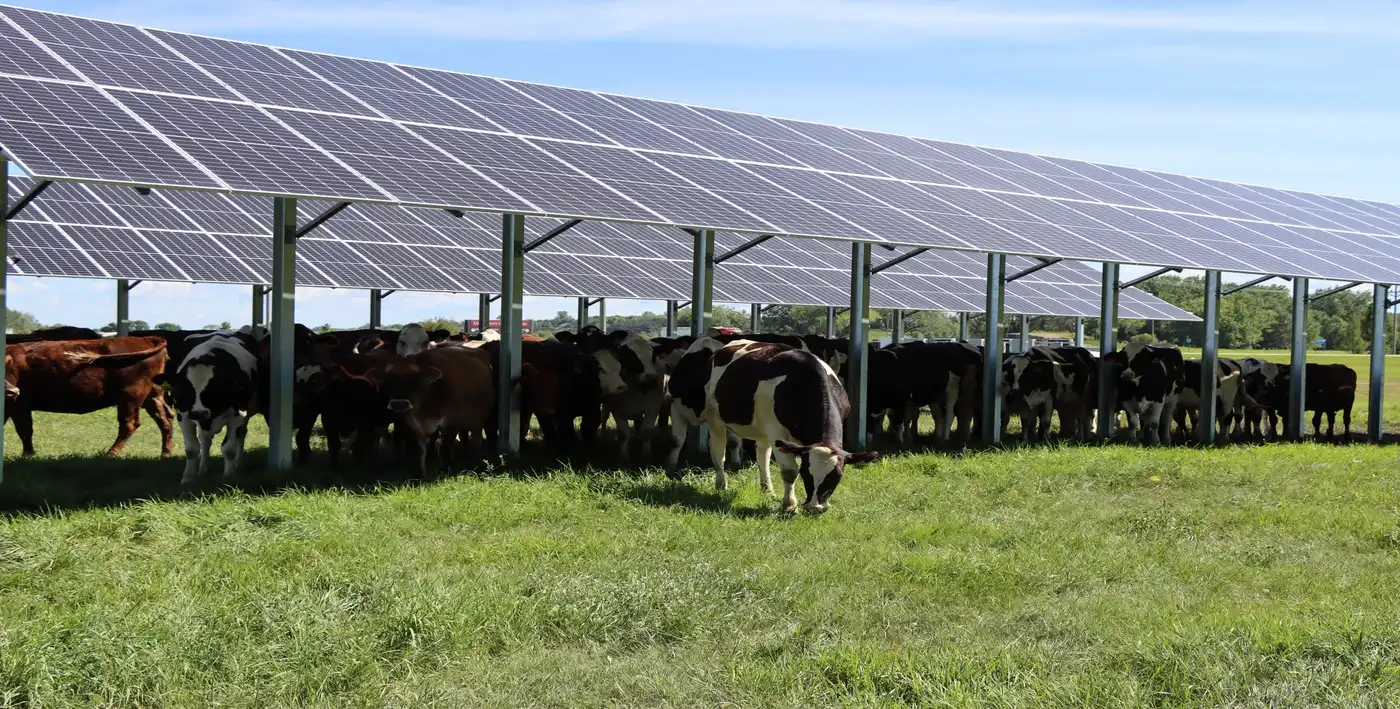
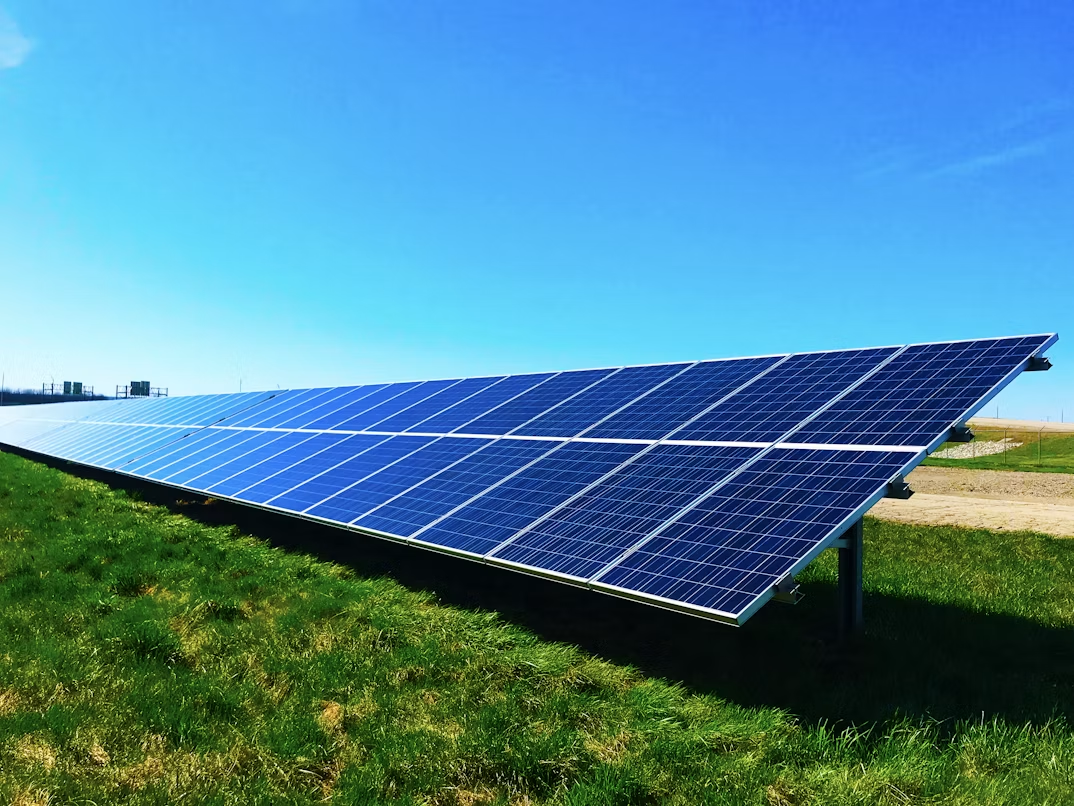
Ground-mounted solar can be a strong alternative when suitable land is available. It allows the installer to optimize orientation and avoid roof limitations. The layout must still account for drainage, setbacks, farm equipment, fencing, livestock, soils, and the distance to the electrical connection. The image below shows why a ground-mount discussion should be part of a broader land-use conversation.
How Much Can Solar Offset on a Poultry Farm?
The amount solar can offset depends on annual production and how that production aligns with the farm's electricity use. A credible proposal uses the property's location, shading, equipment, utility bills, and rate schedule. It should show expected annual generation, the portion likely used on site, and the remaining utility charges.
A poultry farm with strong daytime summer loads may consume a high percentage of solar production as it is generated. That can be valuable, but it should be modeled rather than assumed. Fixed charges, demand charges, and minimum bills may remain even when annual kilowatt-hour purchases fall.
Owners comparing options can review our broader page about solar for agricultural operations and then request a model based on their own meters. The useful question is not how many panels fit. It is how a proposed system changes the farm's expected bills and cash flow under conservative assumptions.
Solar Incentives for Poultry Operations
Eligible farms may have access to federal tax benefits, agricultural programs, utility incentives, or state and local funding. Program rules change, and not every farm or project qualifies. The Internal Revenue Service explains current requirements for the Clean Electricity Investment Credit. A tax professional should confirm how those rules apply to the farm's ownership and tax position.
Agricultural programs may require applications, energy assessments, competitive scoring, or approval before construction begins. Incentives should be verified before they are entered into a financial model. Our overview of commercial solar locations also explains why two otherwise similar farms can receive different results based on address and utility territory.
What Should a Poultry Farmer Ask Before Going Solar?
A poultry farmer should ask how the system was sized, which meter it serves, what roof or land assumptions were used, which incentives have been verified, and how construction will protect farm operations. The proposal should also identify who is responsible for interconnection, permitting, monitoring, maintenance, and future roof coordination.
- Does the analysis use all relevant meters and at least 12 months of bills?
- Has an engineer reviewed the poultry-house roof or ground-mount area?
- Are fixed and demand charges separated from energy charges?
- Are incentive assumptions current and supported by program rules?
- Can installation be scheduled around flock, feed, and equipment needs?
Start With the Farm's Actual Energy Use
Solar panels for poultry houses can be financially compelling, but the project needs to fit the way the farm works. A free preliminary review can begin with utility bills, the site address, roof or land information, and any planned expansion. From there, the farm can compare rooftop and ground-mount options, expected production, available incentives, and projected cash flow.
Ethics & Energy develops commercial solar solutions around real operating data. That gives poultry growers a clear basis for deciding whether solar belongs in the farm's long-term plan.