
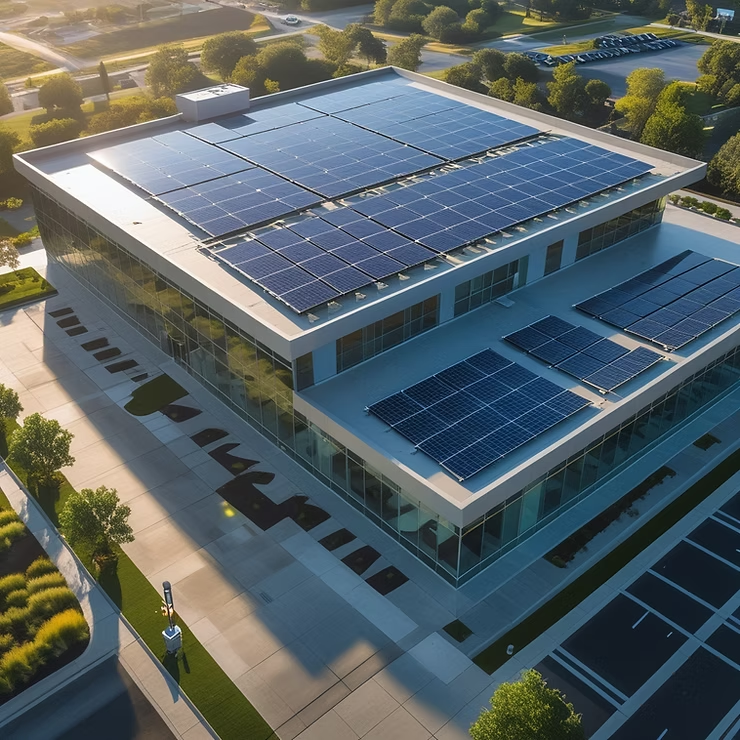
Solar can turn an underused commercial roof into a working asset. For many corporate buildings, the main benefits are lower electricity purchases, more predictable operating costs, and a visible investment in the property. The result depends on the roof, the utility rate, the building's energy use, and the incentives available at that location.
Office buildings use electricity throughout the workday for heating and cooling, lighting, computers, elevators, kitchens, and other equipment. That daytime demand often overlaps with solar production. When the system is sized around the building's actual usage, much of the energy can be consumed where it is generated.
That does not mean every office needs the largest array that will fit. A useful commercial solar plan starts with utility bills, interval usage data when available, roof information, and the company's plans for the property. Those details reveal whether rooftop solar, a carport, or a combination of options makes the most sense.
What Are the Benefits of Solar Panels on Commercial Buildings?
Solar panels on commercial buildings can lower purchased electricity, make part of the energy budget more predictable, use otherwise idle roof space, and support corporate sustainability goals. A well-designed system can also improve the usefulness of the property without taking space away from employees, customers, or daily operations.
The most immediate benefit is simple: every kilowatt-hour produced and used on-site is one the business may not need to buy from the utility. The value of that energy depends on the utility tariff and the time it is produced, so a financial model should be based on real bills rather than a national average.
Solar can also reduce exposure to future electricity price increases. It will not remove every line item from a utility bill, and it may not reduce demand charges unless production overlaps with the building's peak. Even so, replacing a portion of purchased power with on-site generation can give management a clearer picture of long-term energy costs.
For companies with public sustainability commitments, solar provides a visible project tied to a real property and a measurable amount of generation. The business should still report the results accurately and avoid treating installation size as proof of total energy efficiency. Combining solar with practical improvements such as commercial LED lighting upgrades can reduce consumption before or alongside new generation.
Rooftop Solar for Commercial Buildings
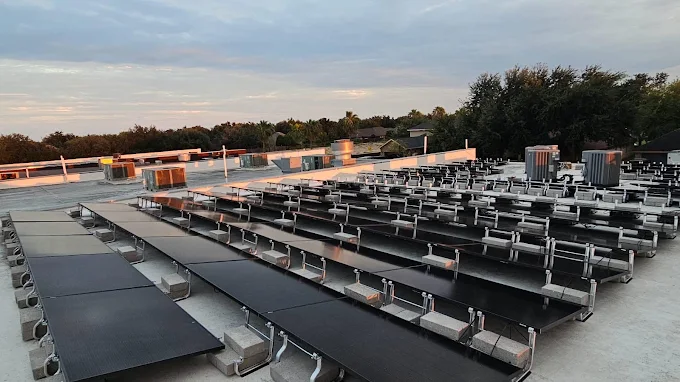
Rooftop solar for commercial buildings works best when the roof has adequate structural capacity, useful sun exposure, and enough remaining life to support the project. The layout also needs to preserve drainage, service access, fire pathways, skylights, and space around heating and cooling equipment.
A roof assessment should happen before the financial proposal is treated as final. The Department of Energy's commercial rooftop solar guide recommends evaluating structural integrity and designing for the wind and snow loads required by local codes. The roofing manufacturer and installer should also agree on the attachment or ballast approach so the project does not create avoidable warranty problems.
Roof age matters. If a membrane or metal roof is close to replacement, coordinating the work may cost less than removing and reinstalling panels later. That conversation is especially important for a corporate portfolio because roof schedules, lease terms, and capital budgets may be managed by different teams.
The right layout is rarely the one that fills every open square foot. Designers need room to work around vents, rooftop units, parapets, shading, and maintenance routes. A slightly smaller system with better access and fewer obstructions may be the more practical long-term choice.
Solar Panels on Office Buildings
Solar panels on office buildings can match the rhythm of a typical workplace. Cooling, ventilation, lighting, and computers often drive demand during daylight hours, which is also when a rooftop system produces electricity. That overlap can help the building use a larger share of its solar production on-site.
Every office is different. A small professional building may have a predictable Monday-through-Friday schedule. A corporate headquarters with data rooms, food service, or extended hours may have a much larger base load. Multi-tenant offices can be more complicated because the owner and tenants may receive separate utility bills, but that does not automatically prevent a project.
Many of our commercial clients lease their buildings, and leasing is rarely an issue when the property owner is included early. The parties need a clear agreement covering installation approval, equipment ownership, roof access, maintenance responsibilities, and who receives the electricity savings. Those are normal project questions, not reasons to dismiss solar before it is evaluated.
Parking can offer another option when the roof is crowded, shaded, or due for major work. Commercial solar carports generate electricity while providing covered parking and a highly visible improvement for employees and visitors. Some properties can combine a smaller rooftop array with carports to reach the desired system size.
How Much Can a Commercial Building Save With Solar?
A commercial building's solar savings depend on its electricity use, utility rate, system production, financing, and available incentives. The most reliable estimate compares the building's current bill with a project-specific forecast and clearly separates energy savings from charges that solar may not reduce.
Start with at least 12 months of utility bills. Interval data, when available, shows when the building uses electricity and whether production is likely to overlap with expensive periods. EPA's ENERGY STAR Portfolio Manager can help owners benchmark a building's energy use before and after improvements.
Production estimates should reflect the location, system size, orientation, tilt, shading, and expected losses. The National Renewable Energy Laboratory's PVWatts Calculator is useful for an early estimate, but a final proposal should use site-specific design information and explain its assumptions.
A strong proposal makes the math easy to follow. It should show estimated annual production, the portion expected to be used on-site, projected bill savings, financing costs, maintenance assumptions, and the incentives included. If one assumption changes the outcome dramatically, management should know that before approving the project.
Commercial Solar Incentives Depend on the Project
Federal, state, local, and utility incentives can materially change the net cost of a solar system for a commercial building. The available combination depends on the property's location, the organization paying for the project, the equipment, and the construction schedule.
The IRS describes the Clean Electricity Investment Credit for qualifying facilities placed in service after 2024. The base credit and potential increases have specific requirements, including wage, apprenticeship, domestic content, and energy-community rules. A business should have its tax adviser confirm eligibility before treating any credit as guaranteed.
Location-specific programs can be just as important. Our guide to commercial solar locations explains why the same building can have a different financial result in another state, city, or utility territory. Incentive deadlines and funding levels also change, so an old proposal may need to be updated before a company relies on it.
Can Solar Power an Office Building During an Outage?
Standard grid-connected solar usually shuts down during a utility outage for safety. To provide power when the grid is unavailable, a commercial building needs equipment designed for backup operation, typically including battery storage, controls, and a plan for which electrical loads will remain active.
Backup design begins with priorities. A company might choose to support emergency lighting, communications, security, access controls, refrigeration, or selected technology systems rather than the entire property. The Department of Energy's solar and resilience guidance explains how solar, storage, and microgrids can work together.
Solar alone and solar with backup capability are different investments. That distinction should be clear in the proposal so the company does not assume a standard rooftop system will keep the building operating during an outage.
Choosing a Solar System for a Commercial Building
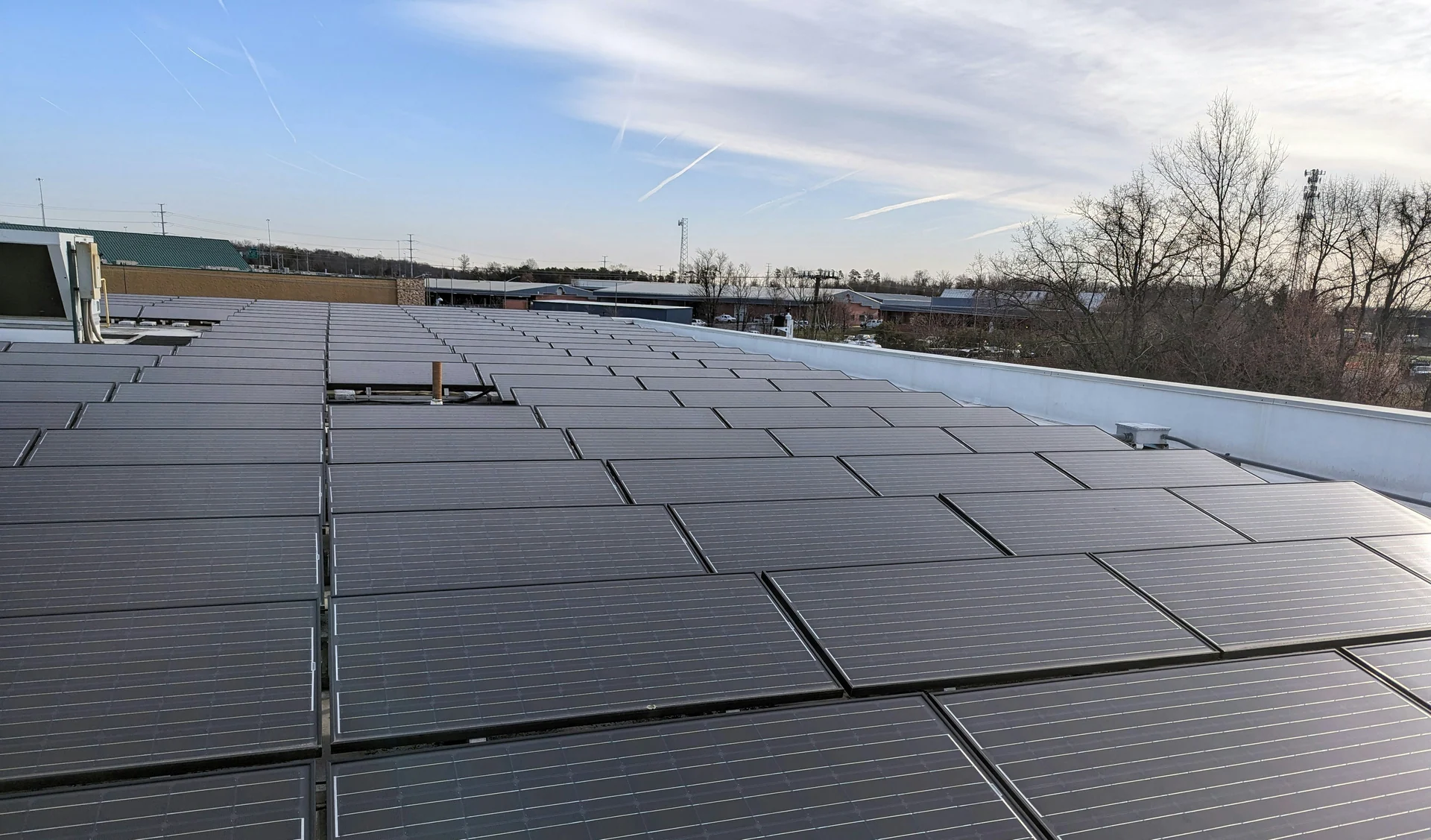
A useful solar system for a commercial building is designed around the business, not just the roof. Start with the property address, utility account, recent bills, operating schedule, roof plans, and any expected changes in electricity use. A company adding electric vehicles, new cooling equipment, or a larger workforce may need a different design than its historical bills suggest.
The review should also address practical ownership questions. If the building is leased, involve the landlord. If several facilities are under consideration, compare them instead of assuming the headquarters is automatically the best starting point. The strongest candidate may be the property with a better roof, a more favorable utility rate, or stronger local incentives.
The benefits of commercial solar panels are most persuasive when they can be measured. Ask for a production forecast, a clear incentive summary, an explanation of utility-bill assumptions, and a layout that respects the building's operations. Avoid proposals that rely on vague national averages or promise that solar will eliminate every charge.
Find Out Whether Your Building Is a Good Fit
Solar energy for corporate buildings can be a practical way to manage electricity costs and put underused property space to work. The next step is not a commitment to build. It is a site-specific review that tests the roof, energy profile, utility rules, and incentives against the company's goals.
For businesses comparing options, the best proposal is one that explains both the opportunity and the limits. It should show what the project is expected to produce, what it is expected to save, and what still needs confirmation. That gives decision-makers a sound basis for choosing whether to move forward.