
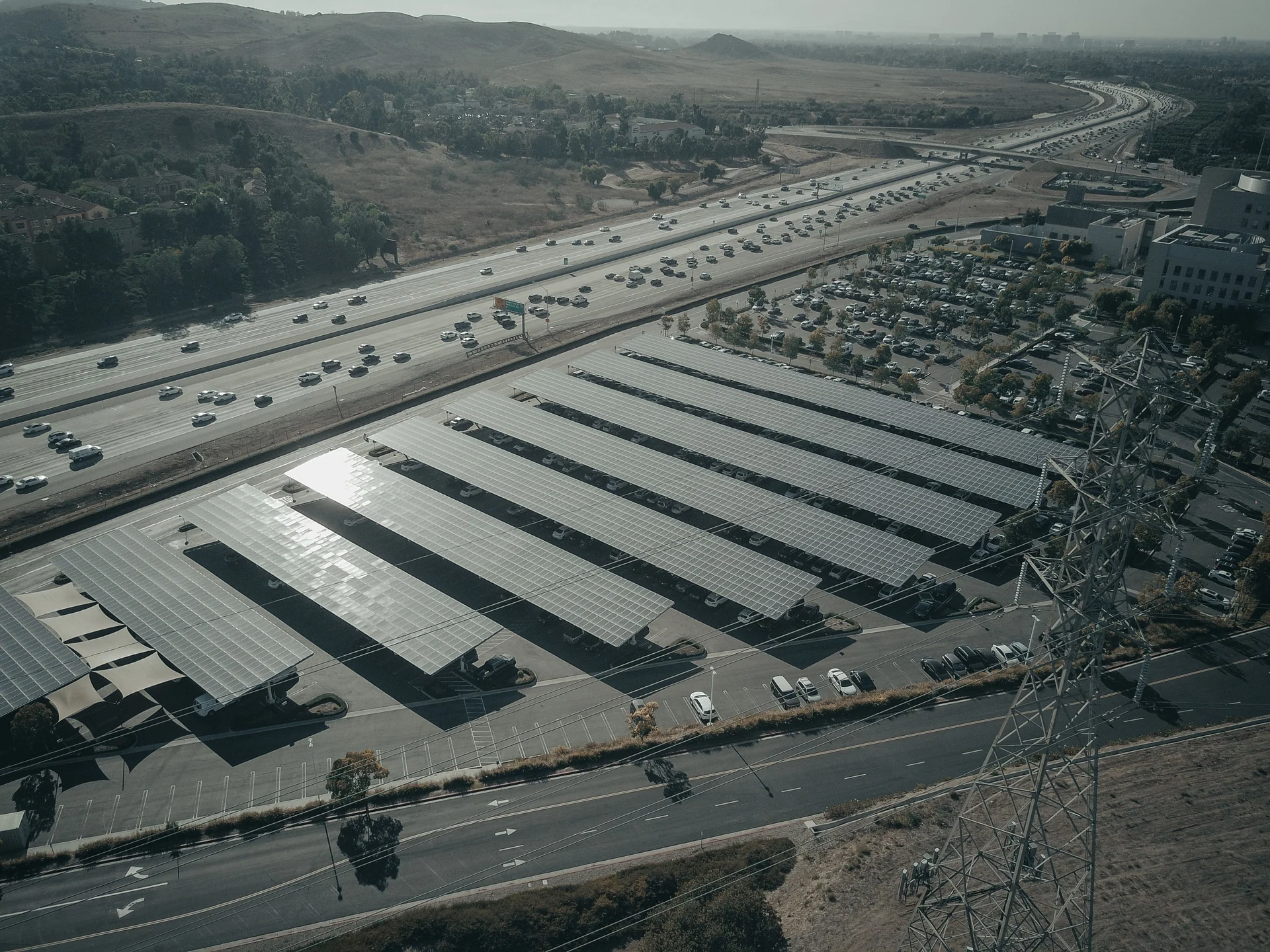
A commercial solar carport turns a parking lot into an energy-producing asset. The structure supports solar panels above parked vehicles, provides shade and weather protection, and can create a visible clean-energy feature at the front of a property.
Carports are not automatically the cheapest solar option. They require foundations, steel, drainage coordination, lighting, vehicle clearances, and careful construction planning. They become especially useful when the roof is crowded or unsuitable, parking is abundant, and the business values covered spaces or electric vehicle charging.
Our commercial solar carport services compare canopy, rooftop, and ground-mounted options rather than assuming one layout fits every property. That comparison helps owners understand what they receive for the added structural investment.
Why Businesses Choose Solar Carports
Parking lots are usually treated as a necessary cost. A solar canopy can give that area a second purpose while preserving the spaces beneath it. The electricity may serve the building, common-area loads, refrigeration, process equipment, or charging stations depending on how the property is configured.
Covered parking also changes the customer and employee experience. Shade can keep vehicles more comfortable in hot weather, and the structure can provide protection from rain or snow. Integrated lighting can improve visibility after dark. For dealerships, offices, health care properties, retail centers, and hospitality sites, the canopy is also a highly visible sign that the business has invested in energy infrastructure.
Owners should still evaluate practical details. Column placement must preserve traffic flow and accessible parking. Canopy height needs to fit delivery vehicles and emergency access. Stormwater, snow, wind, lighting, security cameras, landscaping, and underground utilities all influence the final design.

Tax Incentives for Solar Carport Installations
Qualifying solar carport projects may be eligible for federal tax benefits and state, local, or utility incentives. Federal rules have become more time-sensitive, so a business considering a project should confirm the construction schedule and eligibility requirements now rather than relying on an older proposal.
The Internal Revenue Service describes the current Clean Electricity Investment Credit and the requirements that can affect the credit percentage. Prevailing wage, apprenticeship, domestic content, energy-community rules, and project timing can all matter. A tax adviser should confirm eligibility for the business and project.
It is also important to separate the solar equipment from the broader parking improvement. Panels, electrical equipment, and certain costs that are integral to qualifying energy property may receive different treatment from paving, landscaping, or portions of the canopy structure. Businesses should not assume that every dollar spent on a parking-lot project receives the same tax treatment.
Some incentive programs can apply to a carport just as they would to rooftop panels because the qualifying technology is still solar energy property. Others have specific site, ownership, equipment, or interconnection rules. The financial model should identify each incentive, its status, and the party responsible for confirming it.
Solar Carport Systems in California
Solar carports are increasingly relevant in California because many commercial properties have large parking areas, high cooling loads, electric vehicle charging, and building-code requirements that consider solar-ready areas. The California Energy Commission explains that solar installed to meet applicable nonresidential requirements may be located on a roof, on the ground, or on a carport.
The state's nonresidential solar and battery guidance also includes covered parking in the calculation of solar-access roof area for certain buildings. Requirements and exceptions depend on the project and permit date, so property owners should use the current code rather than generalizing from another site.
California is not the only place where carports make sense. A business in another state may have better project economics because of local grants, utility programs, electricity rates, or available parking. Our California commercial solar page is one example of the location-specific review every project deserves.
How Much Does a Commercial Solar Carport Cost?
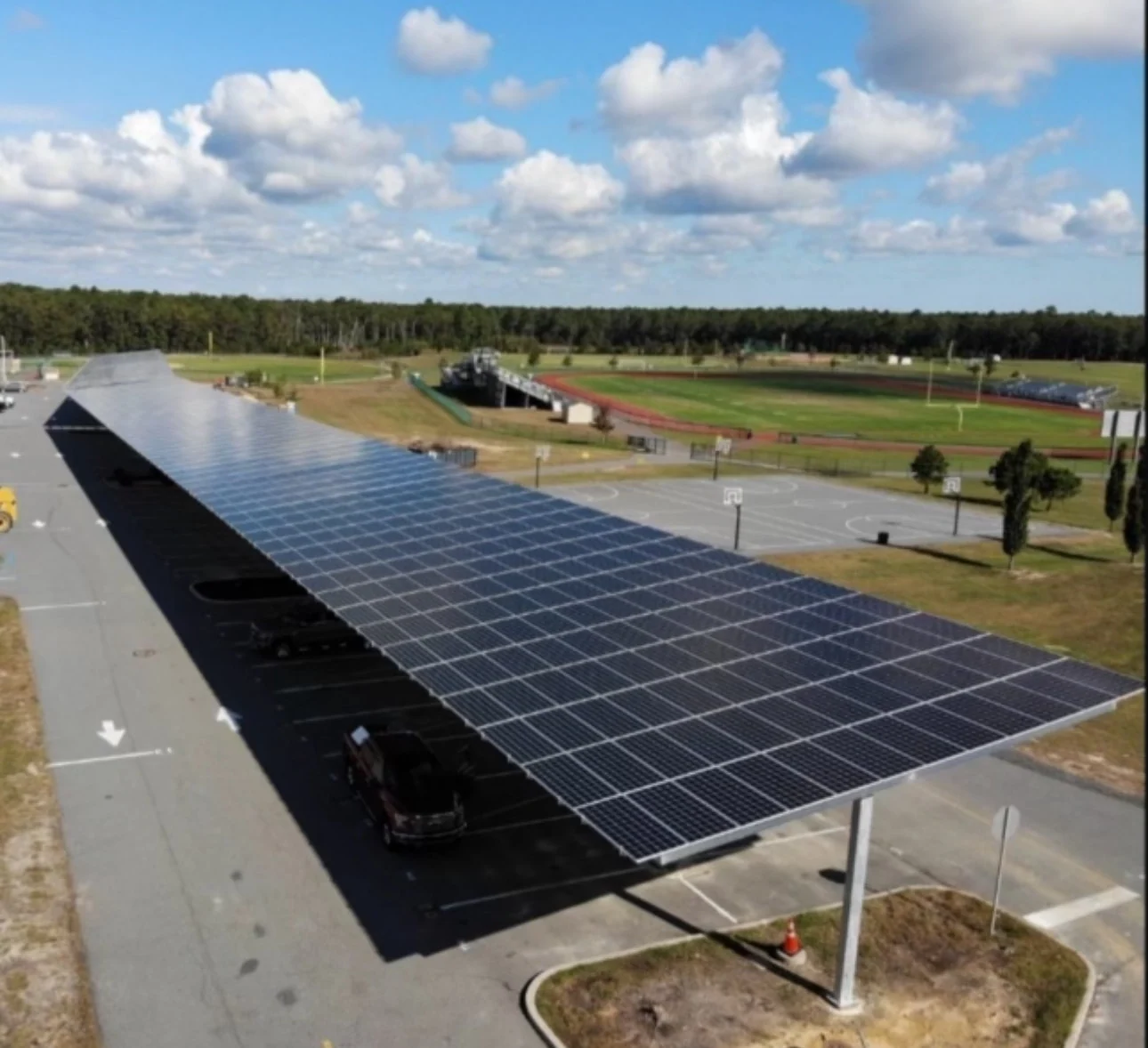
A commercial solar carport costs more than panels alone because the project includes foundations, structural steel, engineering, drainage coordination, electrical equipment, and construction within an active parking lot. Final cost depends on system size, soil conditions, canopy height, column spacing, wind and snow requirements, lighting, EV charging, and utility interconnection.
A useful estimate starts with a site plan, utility bills, parking dimensions, geotechnical assumptions, and the owner's priorities. A dealership that wants premium covered inventory may choose a different layout than a warehouse that needs employee shade or a medical office that must protect accessible routes.
The evaluation should compare net cost after verified incentives, expected energy production, financing, maintenance, and the value of non-energy benefits. A lower-cost rooftop array may deliver the best energy return, while a carport may justify its added cost through parking improvements and visibility. Sometimes a combined rooftop and carport design produces the strongest result.
Carports and Electric Vehicle Charging
Solar carports pair naturally with EV charging because both systems use the same parking area and create a visible connection between energy generation and transportation. That does not mean each charger runs directly from the panel above it. The solar, chargers, building, utility service, and any battery storage are coordinated through the property's electrical system.
Charging loads need to be modeled carefully. Charger power, daily use, future vehicle adoption, demand charges, and available service capacity affect the design. A property that already invested in chargers may find that solar improves the long-term energy strategy, while a new project can plan conduit and equipment locations together.
Auto retailers can learn more from our page about solar for auto dealerships. Other property types can use the same design principles without copying a dealership layout.
Are Solar Carports Right for Every Business?
No. Solar carports are a strong option when parking is available, the property values covered spaces, and rooftop or land constraints make other configurations less attractive. They may be a poor fit where foundations conflict with underground utilities, parking cannot be disrupted, or the added structure does not support the owner's financial goals.
A comparison should include at least rooftop, carport, and ground-mounted alternatives where each is physically possible. Businesses can also review our solar locations page because incentives and utility rules can change the preferred option.
Plan the Parking Lot and the Power System Together
A good carport project coordinates energy production with the realities of the site. It addresses traffic, columns, drainage, lighting, snow and wind, security, accessible routes, EV charging, and future parking needs before the financial model is finalized.
Ethics & Energy can prepare a site-specific comparison using the property's bills and layout. The result should show what the carport is expected to produce, which incentives may apply, how it compares with other mounting options, and whether the project supports the business's operating and financial goals.